Is Shchi Healthy? It Depends Much More on the Pot Than the Name

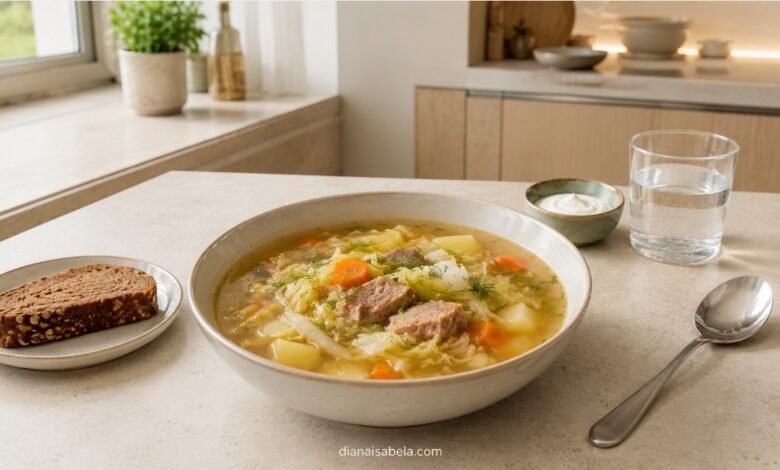
Shchi can absolutely fit into a balanced meal, but calling the entire soup “healthy” without seeing what went into the pot is a little too convenient. A clear fresh-cabbage shchi made with vegetables and a restrained amount of lean meat is nutritionally a very different dinner from a large restaurant bowl made with fatty beef, salty stock, sauerkraut and a generous cloud of sour cream.
The name does not tell you the portion, the broth, how much salt was used, whether the cabbage was fresh or fermented, how much meat is hiding below the surface, or whether sour cream arrived as one spoonful or a dairy landslide. Those details matter much more than the fact that the menu says shchi.
So I would not put shchi into a moral category of “good soup” or “bad soup.” I would look at the bowl. Cabbage and other vegetables can make it a wonderfully vegetable-forward meal; broth and meat can provide substance; sauerkraut brings flavor but can also bring considerable salt; sour cream changes richness quickly. As usual, dinner is more interesting when we stop asking one-word questions about complicated pots.
The Health Question Starts With Five Details, Not With the Word “Shchi”
If I wanted to understand a bowl nutritionally, I would first ask what kind of shchi it is. Fresh cabbage or sauerkraut? Beef, chicken, mushroom or vegetable broth? How much meat? Are potatoes part of the bowl? Is sour cream already mixed in or served on the side? Those answers tell us far more than the soup’s name alone.
Portion size matters just as much. A small brothy first course and a very large restaurant bowl are not nutritionally equivalent simply because the recipe began with the same cabbage. Neither is a homemade soup where you control the salt equivalent to a prepared version whose stock, fermented cabbage and seasoning you cannot see.
If you are still sorting out the different soups themselves, my introduction to how the main shchi styles are actually built is useful first. Once the fresh, sour and green versions stop looking like one fixed recipe, the nutrition question becomes much easier to answer sensibly.
Both can be part of a vegetable-rich soup, but fermented cabbage changes the sodium and acidity picture substantially.
A light vegetable or chicken broth and a rich fatty meat broth can produce very different finished bowls.
A few lean beef pieces are different from a heavily meat-loaded soup with visible fat throughout the broth.
Sour cream, extra bread and a full second course all become part of the meal even though they are not technically inside the original pot.
This becomes especially important with sauerkraut, packaged stock or heavily seasoned restaurant soup.
Cabbage Is One of the Reasons Shchi Can Be a Very Sensible Soup
Classic shchi gives cabbage enough space to be more than garnish. In fresh versions, there may be a substantial amount of cabbage alongside carrots, onions, potatoes and herbs, which means the bowl can contribute a meaningful portion of vegetables to a meal instead of treating vegetables as the parsley beside something fried.
Cabbage also brings dietary fiber and naturally occurring micronutrients while remaining relatively modest in energy on its own. The important phrase is on its own. Once cabbage is cooked in a rich broth and followed by sour cream, several slices of buttered bread and a plate of kotleti, the nutritional story belongs to the whole meal rather than to the cabbage leaf we began with.
I actually like that distinction because it removes the need to make cabbage perform as a miracle ingredient. It does not need detox mythology or wellness marketing. It is simply a useful vegetable that works exceptionally well in soup.
Sauerkraut Is Not Automatically “Healthier” Than Fresh Cabbage
Fermentation makes sauerkraut interesting, but it does not turn every bowl of sour shchi into a nutritional trophy. Fermented cabbage is still cabbage, yet the process traditionally involves salt, and that matters when the sauerkraut becomes a major ingredient rather than a tablespoon on the side.
The amount of salt can vary enormously between products and homemade batches. Then the cook may add salted broth, meat and more seasoning, which means sodium can accumulate from several directions before anyone tastes the finished soup. This is one reason I would never estimate the sodium content of restaurant sour shchi merely by looking at it.
At the same time, sauerkraut gives so much acidity and flavor that a cook may not need to rely on enormous amounts of fat to make the soup interesting. A deeply flavored sour shchi can be satisfying because fermentation, broth and vegetables are doing the work rather than because everything has been covered in cream.
If the difference between fresh and fermented cabbage is still fuzzy, this is where I compare what those two starting ingredients do to the entire bowl.
If There Is One Thing I Would Actually Watch, It Is Sodium
Sour shchi has several opportunities to become salty. Sauerkraut is made with salt. Prepared stocks can already contain sodium. Meat may be seasoned. Then the cook seasons the final soup. None of those ingredients is automatically a problem by itself, but together they can push a bowl much further than its gentle cabbage-soup appearance suggests.
This is especially relevant in restaurant or deli shchi because you do not control the stock or know how salty the sauerkraut was before it entered the pot. Taste is not a perfect guide either: strong acidity can make a soup taste bright and balanced even when the sodium is substantial.
For homemade shchi, the obvious advantage is control. You can choose lower-sodium broth, taste the sauerkraut before seasoning, adjust how much fermented liquid enters the pot and add salt only after the soup has cooked long enough for its ingredients to exchange flavors.
If sodium is something you have specifically been advised to limit, a restaurant guess is not a substitute for nutrition information or individual medical advice. Soup is good at many things; issuing laboratory results from across the dining room is not one of them.
Broth Determines More Than Flavor
A clear broth can make shchi feel deceptively light because most of the bowl is liquid, but what went into that liquid still matters. A vegetable broth can keep the soup relatively simple. Chicken broth may add more body while remaining fairly light, depending on how it is prepared. Beef broth can range from clean and lean to visibly rich with fat.
If beef is simmered with the soup and tender pieces remain in the bowl, shchi can also provide protein and become much more substantial as a meal. That can be useful if soup is lunch rather than merely the first course. What changes the equation is the cut of meat, the quantity and how much fat remains in the broth.
I would therefore distrust blanket statements such as “beef shchi is unhealthy” just as much as “vegetable shchi is healthy.” A moderate portion of meat in a vegetable-heavy broth is one thing; a huge bowl with a heavy layer of fat is another. Recipes have details for a reason.
The Potato Is Not the Villain of This Story
Potatoes often appear in shchi because they make practical culinary sense. They add substance, absorb broth and provide a mild starchy contrast to acidic sauerkraut. In green shchi, they also soften sorrel’s tartness. Their job is not sinister; their job is to be potatoes.
The amount matters more than their mere presence. A few potato pieces distributed through a large bowl of cabbage and broth are very different from a soup that is essentially potato with occasional cabbage sightings. The same principle applies to what happens after the soup: shchi containing potato followed by a huge mound of mashed potatoes is a different meal from shchi plus a fresh salad.
This is why I prefer thinking about balance instead of banning individual ingredients. A traditional dish rarely becomes more useful when we start prosecuting its vegetables one by one.
Sour Cream Can Change a Light Bowl Quite Quickly
A small spoonful of sour cream is not the same thing as half a cup stirred into the pot. Used as a garnish, it adds creaminess and fat, softens acidity and can make a sour or green shchi feel wonderfully rounded. Because it is rich, you usually do not need much for the effect to be noticeable.
The easiest strategy if you want control is to serve sour cream separately. Taste the broth first, then add what you actually want. This is better for flavor as well as portion awareness because you can see how much is going into the bowl instead of discovering that the soup has somehow become a dairy product with cabbage.
I would not remove sour cream automatically in the name of virtue. If one spoonful makes a vegetable-heavy soup dramatically more enjoyable, that can be a perfectly reasonable trade. Food is supposed to be eaten, not merely approved by a committee.
Does Shchi Have Protein?
It can, especially when the soup is prepared with beef, chicken or another meat. The amount depends almost entirely on how much meat is actually served in the portion. A beef-flavored broth with three tiny pieces of meat is not nutritionally the same as a substantial beef shchi where meat appears in nearly every spoonful.
Meatless versions can still be satisfying because cabbage, potatoes and mushrooms give texture and volume, but they may provide less protein unless another ingredient or the rest of the meal supplies it. That is not automatically a problem; it simply means the soup needs to be considered in the context of lunch or dinner rather than evaluated in isolation.
If I were planning a lighter vegetable shchi as a first course, I would be perfectly happy letting the second course provide most of the protein. If the soup itself needed to carry the meal, I would want it to be more substantial.
Does Shchi Have Fiber?
Cabbage and the other vegetables in shchi contribute dietary fiber, but the amount in the finished bowl depends on how much actual vegetable is present. A cabbage-heavy homemade soup naturally gives you more than a restaurant bowl containing mostly broth and a decorative ribbon of cabbage.
This is another reason I care more about what I can see in the bowl than a generalized nutrition claim. If there is cabbage, carrot, onion and perhaps potato throughout the portion, the vegetables are doing meaningful work. If the broth is nearly empty, the word “cabbage” in the menu description cannot magically increase the amount eaten.
Is Shchi Low in Calories?
Sometimes, but there is no responsible universal number. A fresh-cabbage vegetable shchi with a clear broth can be relatively light, while a large beef version with more meat, visible fat and sour cream will contain considerably more energy. Portion size alone can double what looks like “the same soup.”
This is why generic calorie figures for shchi should be treated cautiously unless they belong to a specific recipe with measured ingredients and a defined serving size. A recipe using lean beef and a tablespoon of sour cream per bowl cannot share a meaningful calorie estimate with another using fatty meat and much more dairy simply because both are called shchi.
If you are tracking calories closely, use the nutrition information for the exact packaged product or restaurant when available, or calculate from the actual home recipe. The soup name is not enough data.
Which Kind of Shchi Is Usually the Lightest?
Fresh-cabbage vegetable shchi
This can be one of the lighter directions when made with plenty of vegetables, a relatively lean broth and restrained oil or sour cream. Fresh cabbage also avoids the salt contribution that comes automatically with sauerkraut.
Fresh shchi with chicken
A chicken-based version can remain fairly light while adding more substance and protein. As always, the result depends on the amount of meat, skin, fat and salt in the broth rather than on the word “chicken.”
Sour-cabbage shchi
Sauerkraut can make a vegetable-heavy bowl intensely flavorful, but sodium deserves more attention. A rich beef version can also become considerably more substantial than fresh vegetable shchi.
Green shchi
Sorrel-based green shchi can be relatively light when built around broth, greens, potato and egg. Meat and sour cream determine how much richer the final bowl becomes.
These are tendencies, not fixed nutritional rankings. A restaurant can make “light” green shchi extremely rich and a home cook can make a beautifully restrained beef soup. If you want to understand the green version before comparing it nutritionally, my sorrel-focused guide explains what is usually hiding beneath that name.
Fresh Shchi and Sour Shchi Solve Different Appetite Problems
Fresh shchi makes sense when I want warmth and volume without an especially aggressive flavor. Because the cabbage is mild, the broth can stay clean and vegetable-forward. That makes the soup easy to pair with a more substantial second course without the meal becoming exhausting.
Sour shchi is more intense and may feel more satisfying even before meat enters the conversation because fermented cabbage brings acidity and salt. Add beef, potato and sour cream and it can become a full lunch very quickly. That does not make it “bad”; it simply means I would probably stop adding food sooner.
The flavor difference is enormous enough that appetite matters too. My tasting-first look at the mild, fermented and sorrel versions is useful if you are choosing by craving rather than by nutrition alone.
What About Fermentation and Probiotics?
This is one place where internet health language gets ahead of the actual soup. Sauerkraut is a fermented food, but once it is simmered in a hot pot of shchi, it should not automatically be treated as equivalent to eating raw, unheated fermented cabbage specifically for live cultures. Heat changes that conversation.
That does not make sauerkraut nutritionally pointless. It remains cabbage and still contributes flavor, texture and other nutrients. It simply means I would not market a steaming bowl of sour shchi as a guaranteed probiotic treatment. The soup has enough legitimate culinary virtues without borrowing claims it cannot promise.
For everyday eating, the simpler interpretation is more useful: sour shchi contains fermented cabbage, but the nutritional value of the finished bowl should be judged from the entire recipe rather than from one fashionable word.
Restaurant Shchi Is Harder to Judge Than Homemade Shchi
A restaurant bowl gives you less information. You may know that it contains cabbage, beef and potato but not how fatty the stock is, how much salt went into it or how much sauerkraut liquid was used. Even the serving size can be difficult to estimate from a menu.
That does not mean restaurant shchi should be treated suspiciously. It means precision is impossible without nutrition data or a recipe. I would make practical observations instead: Is the broth visibly oily? Is the soup heavily meat-based or vegetable-heavy? Is sour cream optional? Is this a cup before dinner or a bowl large enough to be dinner?
If you specifically care about meat, broth or fresh versus fermented cabbage, asking the kitchen is completely reasonable. These are the menu questions I use when the description is too vague to tell me what will arrive.
A Deli Bowl Can Be Wonderful — but “Homemade” Is Not Nutrition Information
Prepared-food counters are one of my favorite places to look for shchi because the soup naturally belongs beside kotleti, buckwheat, potatoes and salads. But the word homemade describes style, not sodium, calories or fat. A lovingly cooked deli soup can still be extremely salty, just as a restaurant soup can be relatively restrained.
If there is a label, use it. If the deli can tell you whether the soup is fresh-cabbage or sauerkraut, meat or vegetarian, that already gives you a better picture. If no nutrition information exists, accept that the exact numbers are unknown rather than manufacturing precision from vibes.
For actually locating those rotating prepared-food kitchens, this is how I approach the deli counter before making a special trip.
Is Shchi Good for Weight Loss?
I would not give any traditional soup that job description. A brothy vegetable-heavy shchi can certainly be less energy-dense than many richer meals, and a bowl containing plenty of cabbage may be satisfying without requiring enormous amounts of meat or cream. But whether someone loses weight depends on a much larger pattern than one soup.
The same shchi can also become a very substantial meal if the portion is large, the broth is rich and the table includes sour cream, several slices of bread, mashed potatoes and a second course. None of those foods suddenly becomes forbidden. They simply count as part of dinner.
If your goal is specifically weight management for medical reasons, individualized guidance belongs with a qualified health professional rather than with a cabbage-soup article. I am very happy telling you what belongs in the bowl; I am less interested in pretending soup can prescribe your life.
Is Shchi Keto or Low-Carb?
Again, the recipe decides. Cabbage itself can fit into many lower-carbohydrate eating patterns, but potatoes are common in shchi and immediately change the carbohydrate content. Carrots and onions contribute some carbohydrate as well, while bread served beside the soup obviously belongs to the meal too.
A cook can make shchi without potato, but that does not mean every restaurant version is automatically suitable for a particular diet. If the distinction matters, ask about potatoes and any other ingredients rather than relying on a generic recipe from somewhere else.
Traditional food does not become less authentic merely because households vary, but dietary labels should describe the actual version being eaten, not the version you hope the kitchen made.
Is Shchi Gluten-Free?
The basic ingredients of many shchi recipes — cabbage, vegetables, meat and broth — do not inherently require wheat. But restaurant or packaged broths, seasoning mixtures and other additions can vary, and cross-contact matters for someone who must strictly avoid gluten.
So if this is a medical necessity rather than a preference, ask the restaurant directly about the broth, seasonings and preparation. “It looks gluten-free” is not useful enough when the consequences matter.
Can Vegetarian Shchi Be a Good Meal?
Absolutely, provided the broth has enough flavor and the rest of the meal makes sense. Mushrooms are particularly helpful because they contribute deep savory character without meat. Fresh cabbage, sauerkraut, onions, carrots, potatoes and herbs can produce a satisfying bowl when cooked thoughtfully rather than simply boiled together until everyone loses hope.
A vegetarian shchi may have less protein than a substantial beef version, depending on the recipe, so I would look at the rest of dinner. Buckwheat, beans in another dish, dairy, eggs or other protein-containing foods can complete the meal if needed.
The important thing is not to confuse “vegetarian” with “light” or “healthy” automatically. Plenty of meatless dishes can be extremely rich, while a modest meat portion in a vegetable-heavy soup can fit quite comfortably into an everyday meal.
How I Would Make a More Balanced Bowl Without Making It Sad
I would begin by keeping the thing that makes shchi taste like shchi. Plenty of cabbage. Good broth. Onion and carrot. Dill. If I wanted sour shchi, I would still use sauerkraut because replacing the defining flavor in the name of optimization rather defeats the exercise.
Then I would control the things that are easy to control: choose a broth whose salt level makes sense, taste before adding more salt, use enough meat for flavor and substance rather than treating the soup as a steak storage facility, and serve sour cream separately. I would keep the vegetables generous and let bread or a second course depend on how filling the bowl already is.
The result should still feel like dinner. If making something “healthier” requires turning it into a joyless imitation of the dish, I would rather eat a sensible portion of the real soup.
What Should You Eat With It?
This matters because a bowl is rarely the entire nutritional story. A light shchi followed by kotleti, mashed potatoes and bread becomes a substantial dinner. A rich beef-and-sauerkraut shchi followed only by a fresh cucumber salad can produce the opposite rhythm.
I usually match the table to the soup rather than stacking every traditional accompaniment at once. Mild fresh shchi can leave room for a proper second course. Rich sour shchi may need only rye bread and something fresh. Green shchi can pair beautifully with a savory main without requiring more acidic sides.
If you are deciding what should actually surround the bowl, I put the bread, kotleti, buckwheat, potato and salad combinations together here.
Five Questions Tell Me More Than a “Healthy” Label
So, Is Shchi Healthy?
It certainly can be a nutrient-dense, vegetable-forward and satisfying part of an everyday diet. Cabbage and other vegetables give the bowl real substance beyond broth, while meat can provide protein and make the soup filling enough to function as a meal. Fresh versions can also be quite light when the broth and toppings are restrained.
But there is no nutritional guarantee built into the name. Sour shchi can accumulate substantial sodium from sauerkraut and broth. Rich beef stock, large meat portions and generous sour cream can make the soup considerably heavier. A giant restaurant bowl followed by an equally giant second course is still a giant meal, even if cabbage was involved at some point.
The useful answer is therefore wonderfully unglamorous: look at the recipe, serving size and entire meal. That tells you more than assigning one moral adjective to a centuries-old soup.
And if you reached this article because you are still trying to find somewhere to taste shchi rather than analyze it from afar, this is where I keep the broader search for an actual bowl.
I Am More Interested in the Bowl People Actually Eat
Nutrition conversations around traditional food become much more useful when they stop pretending every grandmother, restaurant and deli uses the same pot. I want to know what your shchi actually looks like. Fresh cabbage or sauerkraut? Beef or mushroom broth? Lots of potato or almost none? Sour cream stirred in, served beside it or forbidden by one particularly opinionated relative?
I am also curious about the lighter versions that remain genuinely delicious. If your family has a way of keeping shchi brothy without making it bland, controlling the salt in sour shchi without losing its fermented character, or building a satisfying meatless version around mushrooms and cabbage, those practical details are far more interesting to me than generic wellness slogans.
And if you find a restaurant or deli serving a particularly good version, send me the city, place and what was actually in the bowl. The more specific the details, the more useful our picture of this soup becomes.
info@dianaisabela.comQuestions About Shchi and Nutrition
Is shchi healthy?
Shchi can fit well into a balanced diet, especially when it contains plenty of cabbage and other vegetables and uses a relatively lean broth. Its nutrition varies considerably with the recipe, serving size, meat, salt, sauerkraut and sour cream.
Is shchi low in calories?
Some fresh-cabbage or vegetable versions can be relatively light, but there is no single calorie value for shchi. Beef, visible fat, potatoes, sour cream and serving size can make different bowls vary considerably.
Is sour-cabbage shchi high in sodium?
It can be. Sauerkraut contains salt from fermentation, and sodium can also come from broth, meat and additional seasoning. The actual amount depends on the recipe and portion.
Does shchi contain fiber?
Cabbage and other vegetables in shchi contribute dietary fiber. The amount in a serving depends on how vegetable-heavy the soup is rather than on the name alone.
Does shchi contain protein?
Meat-based shchi can provide protein from beef, chicken or other meat. The amount depends on how much meat is actually included in the serving. Meatless versions may need other foods in the meal if more protein is desired.
Is fresh-cabbage shchi healthier than sour shchi?
Neither is automatically healthier. Fresh shchi may contain less sodium because fresh cabbage is not salted during fermentation, while sour shchi can still be vegetable-rich and satisfying. The broth, meat, salt, portion and toppings all matter.
Is shchi good for weight loss?
A vegetable-heavy brothy shchi can be a relatively light and filling meal, but no single food guarantees weight loss. The total diet, portion size and what is served with the soup matter much more.
Is shchi gluten-free?
Many basic shchi recipes do not require wheat, but restaurant broths, seasonings and preparation can vary. Anyone who needs to avoid gluten strictly should verify ingredients and cross-contact directly with the kitchen.
Is vegetarian shchi healthy?
Vegetarian shchi can be a vegetable-rich meal, particularly when made with cabbage, mushrooms and a flavorful broth. Its overall nutrition still depends on ingredients, portion size and what accompanies it.
How can I make shchi less salty?
When cooking at home, use a lower-sodium broth, taste sauerkraut before adding extra salt, control how much sauerkraut liquid enters the pot and season the finished soup only after its flavors have had time to combine.