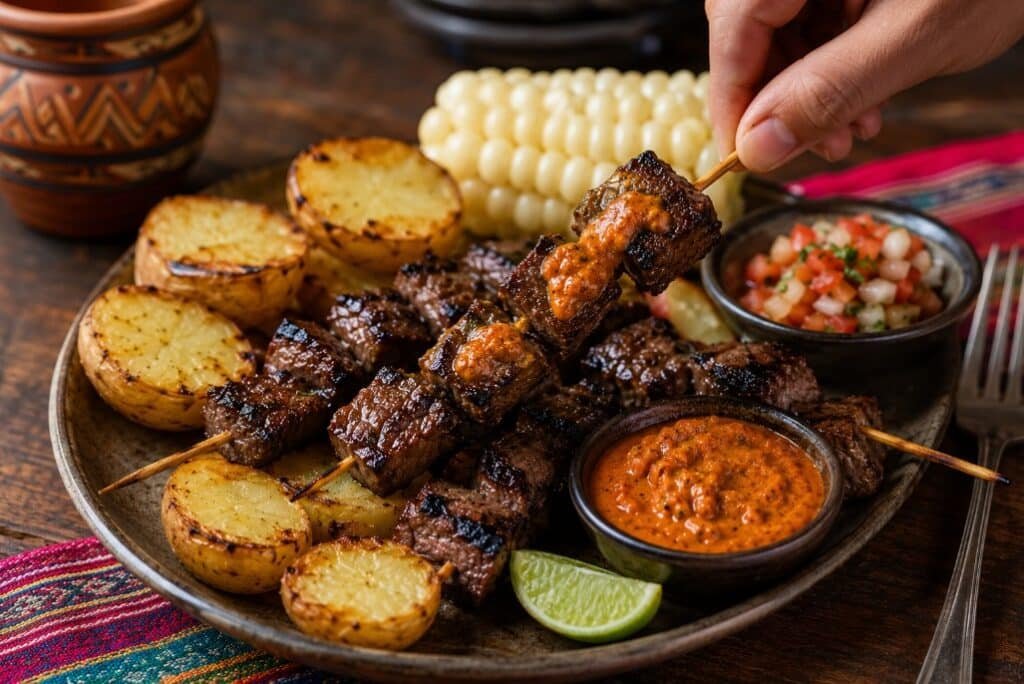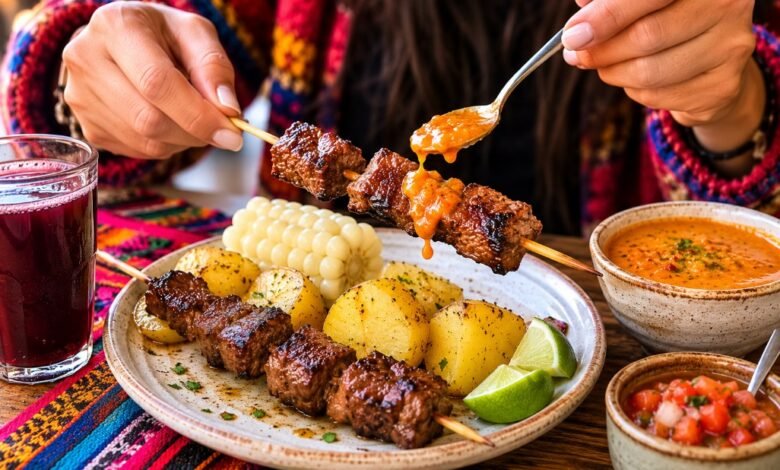
The first time somebody puts a Bolivian anticucho in front of you, the dish looks wonderfully uncomplicated: a skewer, pieces of dark grilled beef heart, potato and sauce. Then somebody says corazón, you remember that corazón means heart, and suddenly everyone at the table develops questions.
Fortunately, eating anticuchos requires considerably less courage than the vocabulary suggests. There is no elaborate ceremony and no secret technique you have to learn before touching the plate. The useful trick is simply understanding what each part is doing — because heart alone, heart with llajua and heart followed by a sauce-soaked potato can feel like three different versions of the same dish.
I would actually recommend a little restraint with the first bite. Not sophistication. Restraint. If you immediately bury the entire skewer under sauce, you may have a delicious dinner but learn absolutely nothing about the meat you were supposedly curious about.
Give the anticucho four bites. After that, all rules may be abandoned.
If you have not found the plate yet, start with my Best Anticucho Boliviano Near Me guide to current U.S. leads and the places worth checking before making a special trip.
How do you actually eat Bolivian anticuchos?
You can eat Bolivian anticuchos directly from the skewer or slide the pieces onto the plate and use a fork. Start by tasting one piece of beef heart without much sauce, then try it with llajua and alternate the meat with potato.
There is no need to turn the meal into etiquette class. The useful order is about flavor, not manners: meat first so you understand the heart, sauce second so you understand what the llajua changes, and potato somewhere in between because it balances smoke, chile and the firm texture of the beef.
Once you know what everything tastes like, eat it however you enjoy it. Nobody receives extra Bolivian citizenship points for maintaining perfect skewer technique.
Before the first bite, read the plate
A La Paz-style anticucho makes more sense once you stop treating the potato and sauce as decorations orbiting a meat skewer. Each component solves a different culinary problem.
Lean, intensely beefy, firm and made more exciting by high-heat browning.
Smoke and deeply browned edges give a lean muscle the richness it cannot supply through marbling.
Chile brings heat while a peanut-based version adds body and richness around the grilled heart.
Soft starch calms the chile, carries sauce and gives your mouth a break from the firm meat.
That is why I would hesitate to judge anticucho after eating one dry cube of heart by itself. It is useful as a first bite, but it is not necessarily the complete bite the plate was designed to give you.
A little like tasting the espresso in tiramisu and declaring the dessert surprisingly bitter.
Do you eat anticucho directly from the skewer?
You certainly can, provided the pieces slide off comfortably and you are not about to stab somebody across the table. Anticucho is historically and culturally at home as street food, so eating from the skewer is hardly an eccentric interpretation.
But there is nothing inferior about sliding the pieces onto the plate and using a fork. In fact, that can be more practical when the restaurant serves generous sauce and potatoes alongside because you can control the amount of llajua in each bite rather than attempting increasingly ambitious skewer-and-sauce choreography.
Eat from the skewer when…
The pieces are modest in size, the skewer is easy to handle and you want the direct grilled-street-food feeling. It also makes sharing individual skewers straightforward.
Slide it onto the plate when…
The pieces are large, sauce is an important part of the serving, you want to combine heart with potato or you simply prefer not to conduct dinner while holding a pointed wooden object.
I switch between both without the slightest moral crisis.
The four-bite method I would give every first-timer
This is not a Bolivian ritual. It is simply the fastest way I know to understand why the plate works.
Start with the heart
Take one piece with little or no sauce. Notice the char first, then the beefiness and texture. Proper heart should feel firm and springy, not soft like liver and not rubbery enough to qualify as recreational chewing.
Add a little llajua
Now put sauce on the second piece. The useful question is not simply whether the sauce is spicy. Notice whether it gives the lean heart more richness, acidity or chile aroma and whether peanut changes the texture of the bite.
Give the potato its moment
Dip or drag a piece of potato through the sauce. Suddenly the quietest ingredient on the plate becomes extremely persuasive. Soft starch absorbs what the meat leaves behind and resets your palate for another smoky bite.
Build the complete bite
Heart, enough llajua to coat rather than drown it, then potato either in the same bite or immediately afterward. At this point the dish stops being several ingredients and starts behaving like a composition.
After bite four, I release you from laboratory conditions.
Llajua is not ketchup; please do not treat it like ketchup
I am not going to tell anyone how much sauce they are legally permitted to enjoy. But if it is your first anticucho, covering every visible surface before tasting the heart is the culinary equivalent of wearing perfume directly under somebody else’s nose.
Start small.
In the La Paz-style preparation, a peanut-based llajua can bring cooked ground peanut and red ají into the dish. The peanut gives body and a rounder richness while the chile keeps the sauce lively. Because heart is so lean, that combination is particularly useful rather than merely ornamental.
The texture matters too. A thicker nutty sauce clings to heart differently from a thin salsa. One spoonful can change a firm, smoky piece of meat into something much richer without altering the meat itself.
My preferred ratio for a first bite: enough sauce to cover part of the heart, not enough to make identifying the heart an archaeological project.
If you love the sauce after that, proceed irresponsibly. Dinner should have some freedom.
The potato is the quiet genius at the table
Potato beside grilled meat is easy to dismiss because potatoes appear beside approximately half the comforting foods humanity has invented. Here, though, it has a particularly clear job.
Beef heart is lean and firm. Char makes it intense. Chile adds heat. Vinegar adds brightness. Peanut sauce adds richness. Potato contributes softness, starch and a mild flavor capable of absorbing all of those things without beginning an argument of its own.
I would alternate between heart and potato rather than eating all the meat first and discovering five lonely potatoes at the end. The contrast is part of the pleasure: char, softness, chile, beef, starch, sauce, repeat.
And if a little pool of llajua remains on the plate after the skewers are gone, you now understand why the potatoes were invited.
And what about yuca?
Official La Paz preparation material includes cooked white yuca as well as potatoes. If your serving includes it, think of yuca as another calm starch capable of carrying sauce, but with a denser, slightly fibrous texture that behaves differently from potato.
I would use it exactly the same way: not as garnish, not as an obligation, but as a break between smoky pieces of heart and a vehicle for whatever sauce you are trying not to finish with a spoon.
Whether a particular U.S. restaurant serves potato, yuca or both depends entirely on its preparation, so do not reject a plate merely because it does not reproduce one municipal recipe ingredient for ingredient.
If the llajua is hotter than expected
This is usually the point where somebody who confidently announced “I love spicy food” begins drinking water with exceptional concentration.
The easiest strategy is also the most obvious: use less sauce. Anticucho is still anticucho without coating every piece. Potato can help make the next bite gentler, and anything cool or mildly sweet you have ordered alongside can give the palate a rest.
What I would not do is assume the entire Bolivian anticucho tradition has one fixed heat level. Llajua varies. Chile varies. Vendors and restaurants vary. A sauce can be fragrantly warm at one table and impressively assertive at another.
Taste before committing. This principle has prevented countless avoidable situations in both food and relationships.
Should you squeeze lime over anticuchos?
If lime or lemon arrives with the plate, try it on one piece rather than immediately baptizing the whole serving.
Acidity makes sense with heart because the meat is deeply savory and the grill brings dark roasted flavors. A little citrus can sharpen the bite and make chile feel fresher. Too much can flatten everything into citrus before you have even understood the seasoning already present.
The La Paz preparation I reviewed lists lemon juice as optional, which is exactly how I would treat it at the table: an adjustment, not a requirement.
What should you order with Bolivian anticuchos?
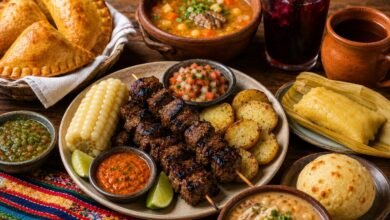
If anticuchos are the reason you came, I would let them remain the flavor center of the meal rather than surrounding them with four more aggressively grilled meats. The most satisfying additions change texture and temperature.
Salteña makes an excellent beginning
A juicy, enclosed pastry filling is almost the opposite of a dry-hot charcoal grill. That contrast makes a salteña especially good when several people are sharing and want more than one introduction to Bolivian food.
Sopa de maní works when the evening needs comfort
Peanut soup repeats the nutty ingredient in a completely different form: warm, soft and soothing rather than spicy sauce clinging to grilled heart. I particularly like the idea in cold weather, when anticucho smoke and a bowl of soup sound considerably more civilized than pretending salad season never ended.
A full main changes the scale of dinner
Silpancho, pique macho, charque or plato paceño can turn an anticucho outing into a large shared meal. I would order one for the table rather than automatically giving every person both skewers and a giant entrée. Bolivian menus are very capable of curing optimism about appetite.
I go deeper into those combinations in what to eat with Bolivian anticuchos.
What should you drink?
There is no single required drink, so I think about the plate rather than imaginary rules.
If the llajua is hot, something refreshing and slightly sweet can be wonderful. Mocochinchi, when available, has enough personality to stand beside the smoke without becoming another spicy element. Cold beer is an uncomplicated partner for charcoal, salt and chile. Water remains suspiciously effective.
I would avoid making the pairing more elaborate than the dinner. Anticucho developed as popular, accessible food. It does not require a beverage with an eighteen-minute explanation from someone named Sebastian.
Street anticucho and restaurant anticucho are the same idea in different clothes
La Paz still treats anticucho as living popular food rather than a museum recipe. Municipal food events continue to feature anticucho among traditional paceño dishes, and dedicated evening fairs have brought together large groups of women vendors working from late afternoon into the night.
That context explains why the dish is so naturally functional. A skewer cooks quickly over strong heat. Potato makes the portion more satisfying. Sauce creates identity from one vendor to another. You can eat without needing a full formal table setting.
A restaurant can make the presentation more polished, put the sauces into small ceramic bowls and arrange three herbs with the concentration of a florist. The essential logic remains heart + heat + starch + sauce.
I like both forms. I am only suspicious when refinement starts removing everything that made the food delicious.
If you are eating anticuchos standing up
Now practicality matters more than elegance.
Hold the wooden end of the skewer, bite pieces that slide away comfortably and avoid pulling so hard that dinner becomes a public demonstration of tensile strength. If a piece resists, slide it toward the end with a fork or use whatever utensil the vendor provides.
Keep sauce manageable. A generous spoonful of llajua is lovely at a table; the same quantity traveling down your wrist at an outdoor event has a rather different personality.
And eat the potato while it is still warm. Cold potato covered in cooling sauce is a convincing argument against procrastination.
What if you are squeamish about the heart?
Do not begin by inspecting every cube anatomically. That is advice I would also give before eating sausage.
Beef heart is muscle. Flavor-wise, it is much closer to lean grilled beef than liver. What you are more likely to notice is the firmer texture, especially if your usual reference point is tender steak.
Take a small piece first. Taste it before sauce. Then add llajua. If the flavor itself is pleasant but the idea is still bothering you, congratulations: your tongue and imagination are having separate meetings.
My What Does Bolivian Anticucho Taste Like? guide explains the meat, texture, char and liver comparison in much more detail.
Takeout anticucho has one enemy: time
Anticucho is happiest close to the grill.
That is not romantic food-writer mythology; it is simple physics. Beef heart is lean. Once it has been cooked and begins cooling in a closed container, the texture firms. Steam softens the char. Sauce placed directly over everything can continue changing the exterior while the potatoes absorb whatever happens to be underneath them.
If I am collecting anticuchos for takeout, I try to eat them quickly and keep sauce separate when the restaurant allows it. Potato handles travel better than heart, so the meat should determine your schedule.
If you have a 45-minute drive home: anticucho would not be the dish I enthusiastically insist on preserving for later while driving past somewhere perfectly comfortable to eat it warm.
What about leftovers?
There is no law requiring leftover anticucho to become tragic, but reheating heart deserves restraint.
The goal is to warm it, not cook it a second time. Long microwave sessions can turn an already lean muscle noticeably firmer. If I had leftover pieces, I would use short gentle reheating and stop as soon as they were pleasantly warm.
Sauce can come back afterward rather than being cooked aggressively with the meat. Potato may need its own reheating time because it is much more forgiving.
Of course, my preferred leftover strategy remains ordering the amount I am actually going to eat. Revolutionary household technology.
How do you know the anticucho in front of you is good?
Forget Instagram for a moment. The most important visual cue is the meat itself.
I want to see
I do not want
One point deserves repeating: **firm does not mean tough**. Heart has structure. That is part of the pleasure. But properly prepared anticucho should still be enjoyable to chew.
Five ways first-timers accidentally make anticucho less enjoyable
1. Drowning the first piece in sauce
You lose the chance to understand the actual heart and grill. Try one mostly naked bite first. Then introduce the llajua and appreciate how much it changes.
2. Expecting filet mignon texture
Heart is lean working muscle. If your only definition of good beef is “requires no chewing,” anticucho will seem strange for reasons unrelated to quality.
3. Assuming firm means badly cooked
Some resistance is normal. The red flag is rubberiness, dryness or connective tissue that makes the piece genuinely difficult to eat.
4. Ignoring the potato
We have discussed this. The potato has earned its position. Please show some respect.
5. Letting the word “heart” decide the flavor before your mouth does
This is perhaps the most common mistake. If somebody told you only that you were eating a beautifully charred lean beef skewer, your expectations would probably be much closer to the actual taste.
How Bolivian anticucho differs at the table from Peruvian anticucho
If you already know Peruvian anticuchos, the eating mechanics will feel familiar: grilled beef heart, skewers, chile and starch. The flavor priorities are where the experience starts shifting.
Classic Peruvian anticucho commonly builds ají panca strongly into the marinade and grill baste, with potatoes and choclo frequently completing the plate. A La Paz-style Bolivian serving becomes especially recognizable through red ají, potato and the possibility of a richer peanut-based llajua.
That means I pay more attention to what happens when the sauce reaches the Bolivian heart. It can alter the richness of the bite much more dramatically than simply adding another layer of heat.
For a full comparison, read Bolivian Anticucho vs Peruvian Anticucho.
What I would order for two people trying Bolivian food for the first time
I would start with one order of anticuchos and salteñas. That already gives you two very different ideas of the cuisine: charcoal and firm beef on one side, juicy filling and pastry on the other.
Then I would add either sopa de maní if we want something comforting or one larger main to share if everybody has arrived hungry. Silpancho gives you another beef preparation without repeating the skewer format; plato paceño takes the table in a more vegetable-and-starch direction depending on the restaurant’s preparation.
I would also ask for llajua rather than assuming every sauce on the table is interchangeable.
And if the restaurant has mocochinchi, I would order it partly because it works with chile and partly because a first Bolivian dinner deserves more personality than cola.
If the anticucho is sold out, the evening is not ruined
This matters particularly in the United States, where anticucho may be less consistently available at a Bolivian restaurant than salteñas, soups or larger national dishes.
If you called specifically for anticuchos and they sold out between the phone call and your arrival, I grant you a brief moment of irritation. Then look at the rest of the menu.
Salteñas, sopa de maní, silpancho, pique macho, charque, falso conejo, plato paceño, huminta, api and mocochinchi can tell you far more about Bolivian food than one skewer ever could.
The point of seeking out a dish is to make dinner more interesting, not to turn dinner into a hostage negotiation.
The bite I want you to remember
Take one properly charred piece of heart. Add enough llajua to give it a little heat and richness without hiding the browned exterior. Follow it with a warm piece of potato dragged lightly through the same sauce.
You should get firm beef, smoke, salt and tang first. Then chile. Then the roundness of peanut if the sauce uses it. Then soft potato calming everything down and quietly preparing you to repeat the entire process.
That sequence explains Bolivian anticucho more clearly than memorizing which hand is supposed to hold the skewer.
Good street food rarely needs an etiquette manual. It needs heat, timing, sauce and somebody sensible enough to eat it while it is still hot.
Know a Bolivian anticucho tradition I should add?
If your family eats anticuchos differently, if your hometown serves them with another sauce or side, or if you know a Bolivian restaurant in the United States doing something particularly good with the dish, I would love to hear about it.
Restaurant name, city, menu photo, sauce details or even the little family rule everyone insists is “the correct way” are all welcome.
Email: info@dianaisabela.com
Food becomes much more interesting once the official recipe meets the way real people actually eat it.
How do you eat Bolivian anticuchos?
You can eat Bolivian anticuchos directly from the skewer or slide the beef-heart pieces onto a plate and use a fork. Try one piece with little sauce first, then add llajua and alternate the meat with potato.
Do you eat anticuchos off the skewer?
Yes, you can bite the pieces directly from the skewer when they are easy to handle. Sliding the heart onto a plate is also perfectly practical, especially when combining it with sauce and potato.
What sauce do you eat with Bolivian anticuchos?
La Paz-style anticuchos can be served with spicy llajua, including versions made with cooked ground peanut and red ají. The sauce adds chile flavor, moisture and richness to the lean beef heart.
Why are potatoes served with Bolivian anticuchos?
Potatoes balance the firm, smoky beef heart with a softer texture and mild starch. They also absorb llajua particularly well and help balance chile, acidity and richness.
Are Bolivian anticuchos spicy?
They can be, but the heat varies by sauce and cook. Red ají and llajua can range from relatively mild and aromatic to considerably hotter, so taste the sauce before adding a large amount.
Should I put llajua on the whole anticucho?
For your first plate, taste one piece of heart with little or no sauce before adding llajua. This lets you understand the grilled beef-heart flavor and then notice how the sauce changes the bite.
What should I order with Bolivian anticuchos?
Salteñas, sopa de maní, huminta, cuñape and larger dishes such as silpancho can complement anticuchos by adding different textures and flavors. Exact menus vary by restaurant.
Can you share an order of anticuchos?
Yes. Skewers are easy to share and are useful for first-time diners who want to try beef heart before ordering a larger portion. Ordering enough for several bites per person gives a better sense of the texture and sauce.
Is Bolivian anticucho good for takeout?
It can be taken to go, but beef heart is best eaten soon after grilling. Because it is lean, the texture can become firmer as it cools. Keeping sauce separate and minimizing travel time can help.
How can you tell if an anticucho is cooked well?
A good anticucho should have strong browning or char, a moist center and beef heart that is firm but easy to bite through. It should not be pale, dry, rubbery or filled with large pieces of connective tissue.