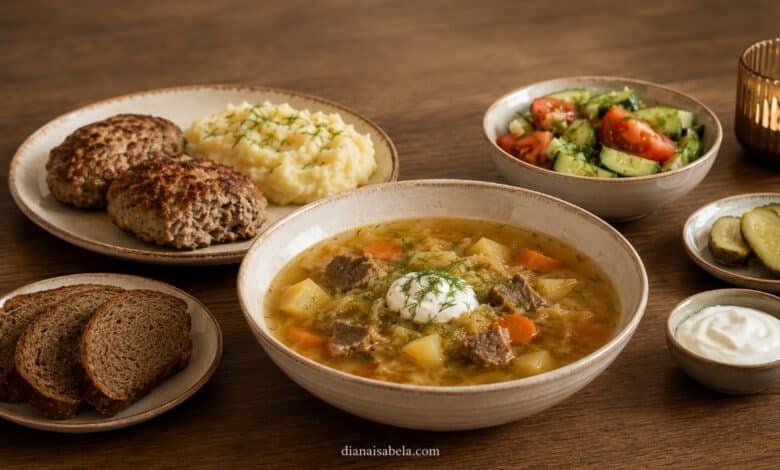
Shchi does not need an army of side dishes to become dinner. In fact, one of the nicest things about this soup is how little it asks from the rest of the table. Give it good bread, perhaps sour cream, and the meal is already halfway dressed. Add a cutlet, dumplings, buckwheat or a crisp salad only if the bowl itself leaves room for them.
The important part is matching the food to the shchi you actually have. A light fresh-cabbage soup behaves very differently from a beefy sauerkraut version, and green sorrel shchi brings enough acidity that surrounding it with pickles, vinegar and three more sour things can turn dinner into a small preservation experiment. The best pairing does not repeat the soup. It gives the soup something it is missing.
So this is less a list of “traditional sides” and more a way to build a table that makes sense: something sturdy, something fresh, perhaps something creamy, and enough restraint to remember that the soup was supposed to be the reason we sat down.
Before Adding Anything, Taste the Shchi You Have
A bowl of shchi can range from almost delicate to extremely substantial. Fresh cabbage simmered in a clear chicken or vegetable broth leaves plenty of room for dinner to continue. Sauerkraut shchi with beef, potatoes and a generous spoonful of sour cream can already feel like the main course disguised as soup. Green shchi with sorrel may be lighter in body but carries enough acidity to influence everything you put beside it.
That is why I would never build the meal from a fixed checklist. Start with the bowl. Ask what it already gives you: richness, acidity, meat, starch, creaminess. Then add what is missing rather than ordering three more dishes with exactly the same personality.
If you are still discovering how different those bowls can be, my comparison of the gentler and more fermented sides of shchi is useful before planning the rest of dinner. Once you know whether the soup is mild or tangy, pairing it becomes much more intuitive.
You can comfortably add a substantial second course: kotleti, dumplings, roast meat, potatoes or buckwheat.
Bread, sour cream and one fresh side may be enough. The table does not become more authentic simply because everyone is too full to move.
Add something mellow, starchy or creamy rather than competing with the acidity in every other dish.
Let the fresh tartness lead and choose a savory second course with fewer pickled or vinegary elements.
Good Bread Is the Most Useful Thing on the Table
There are meals where bread is decorative. Shchi is not one of them. A substantial slice of rye or dark bread gives a brothy soup something solid to lean against, especially when the bowl itself contains more liquid than potato or meat. It also solves the deeply practical problem of delicious broth remaining at the bottom after the spoon has become inefficient.
Dark rye works especially well with sour-cabbage shchi because its earthy, slightly malty character can stand beside fermented cabbage without disappearing. With gentler fresh shchi, I also like a less aggressive rye-wheat loaf or any bread with enough structure to survive dipping. What I do not need is a sweet, fluffy dinner roll behaving as if it wandered into the wrong restaurant.
If the bread arrives warm, wonderful. If it comes with butter, also wonderful, although I would taste the shchi first before automatically turning every slice into a dairy delivery system. A spoonful of sour cream may already be bringing enough richness to the meal.
Sour Cream Is Less a Side Than a Decision
Sour cream changes shchi enough that I think of it almost as seasoning. In fresh-cabbage soup it adds body and softens the clean broth. In sour shchi it rounds the fermented acidity while leaving enough tang to keep the soup interesting. In green shchi it works beautifully against sorrel, potato and egg because fat makes the leafy sharpness feel smoother without muting it completely.
If you are trying a new bowl, I prefer sour cream on the side. Taste the soup first, then add a little and taste again. That small ritual tells you more about the broth than immediately turning the entire bowl pale. I feel similarly about dill: fresh herbs belong at the end, where they can actually smell fresh instead of spending half an hour being boiled into invisibility.
And no, you do not need a mountain of sour cream. The goal is still to taste soup. If the cabbage has vanished under a snowdrift, we may have lost the plot.
The Best Pairing Rule Is Contrast, Not Repetition
If the soup is sour, the rest of dinner does not need to audition for a pickle jar. If the soup is rich, your side dish does not have to be fried, buttery and covered in cream. If the bowl is extremely light, however, pretending three cucumber slices constitute a full second course is equally unnecessary.
I like to think in contrasts. Acidic shchi wants something mellow. Brothy shchi can handle something substantial. Meat-heavy shchi benefits from freshness. Green shchi likes a savory partner that lets sorrel remain the brightest flavor at the table.
This sounds almost too obvious, but it is the difference between a meal that feels generous and a meal where every plate is shouting the same sentence.
Kotleti May Be the Easiest Second Course to Get Right
A simple pan-fried kotleta beside shchi makes enormous sense because the textures are completely different. The soup is wet, soft and brothy; the cutlet has a browned exterior and a juicy interior. With fresh-cabbage shchi, the combination gives you a gentle first course followed by something savory and substantial. Add mashed potatoes or buckwheat and dinner feels complete without requiring the table to become complicated.
With a very rich beef shchi, I would be more cautious. Another large meat portion can turn a comfortable meal into something that requires strategic reclining afterward. In that case, one smaller cutlet with a fresh salad works better than a plate containing enough meat for an agricultural conference.
Dumplings belong here too
Pelmeni or vareniki can work beautifully after a lighter bowl, particularly when the filling is not excessively heavy. The shift from broth to tender dough makes the meal feel naturally progressive rather than repetitive. Potato, mushroom or cheese fillings can be especially pleasant when the soup already contains plenty of beef.
If your shchi is sour and intense, I would keep the dumpling topping simple. Butter, a restrained amount of sour cream or fried onion is enough. There is no need to make the second course compete with the soup for the title of Most Dramatic Thing Made From Dairy.
Roast chicken or simple grilled meat
These work when you want a cleaner, less traditional-looking second plate. A modest portion of roasted chicken beside fresh shchi can make a lovely everyday dinner, especially with potatoes or buckwheat. I prefer seasoning that stays savory rather than sweet because sugary glazes can feel oddly disconnected from a cabbage broth.
Potatoes and Buckwheat Do the Quiet Work
Potatoes are already common inside shchi, so serving more potatoes beside the soup can sound redundant. It is not necessarily redundant if the textures change. A few potato cubes in broth do not feel remotely like creamy mashed potatoes beside a cutlet. One belongs to the soup; the other grounds the second course.
Mashed potatoes are especially good with sour shchi because the softness and mildness calm fermented acidity. I would keep them simple rather than loading them with cheese, garlic, cream and every other ingredient with a résumé. The soup already has personality.
Buckwheat is even more useful when the meal contains meat. Its nutty, earthy flavor works with beef and mushrooms without becoming heavy, and it gives you a substantial side that is not another potato. A bowl of fresh shchi followed by kotleti and buckwheat is exactly the kind of dinner that feels comforting without behaving like a stunt.
Something Fresh Can Rescue the Entire Table
Eastern European comfort food gets unfairly photographed as though every meal happens in February under a blanket of beige. A simple fresh salad can change the entire rhythm. Cucumber, tomato, dill, radish, scallion or crisp cabbage all give a hot bowl of soup something cool and crunchy to sit beside.
If the shchi is already sour from sauerkraut, I would keep the dressing restrained. A little oil, herbs and salt may be enough. Strong vinegar beside a tangy fermented broth can make every course feel like the same flavor wearing different clothes.
With fresh-cabbage shchi, you have more freedom. A slightly sharper cucumber salad, tomato salad or lightly pickled side can provide the acidity the soup itself lacks. This is where knowing your bowl matters more than following a universal list.
Pickles are good; a pickle convention is unnecessary
A crisp cucumber pickle can be lovely with a rich meat-based shchi, especially if you are eating a second course with potatoes or buckwheat. But if the soup itself is sauerkraut-heavy, I would not automatically add pickled cabbage, pickled mushrooms, vinegar salad and pickled tomatoes simply because all four exist.
One acidic accent is appetite. Five acidic accents are a committee.
Green Shchi Wants a Slightly Different Dinner
Green shchi often gets its brightness from sorrel rather than fermented cabbage, so the acidity feels leafy and fresh. Potato, egg, chicken or beef may give the bowl substance, but the overall mood can still be lighter than a deep sauerkraut shchi. That makes it particularly good before a savory second course.
I like kotleti, roasted chicken, mushroom dishes, buckwheat or simply dark bread beside it. What I would avoid is surrounding the sorrel with aggressively vinegary salads and pickles. Let the green soup provide the bright note; give the rest of the meal somewhere quieter to land.
If you are not yet sure why green shchi behaves so differently from cabbage-based versions, my guide to the sorrel-centered branch of the soup explains the ingredient logic in more detail.
Can Borscht and Shchi Belong in the Same Meal?
Technically, yes. Emotionally, I have questions.
Both are soups with enough personality to deserve attention, and serving full bowls of both before a main course can turn dinner into a liquid endurance event. If you are comparing them deliberately, tasting-size portions can be fun because the contrast between cabbage-driven shchi and beet-driven borscht becomes immediately obvious. For a normal dinner, however, I would choose one and let it have the stage.
If you are deciding which soup belongs before the rest of your meal, my cabbage-versus-beet comparison makes that choice much easier. Borscht tends to bring earthy sweetness; shchi stays closer to cabbage, broth and, in sour versions, fermentation.
A Russian or Ukrainian Deli Can Build the Whole Dinner in Ten Minutes
This may be my favorite way to assemble a shchi meal because the prepared-food counter has already done most of the cooking. Start with the soup, then look at what is actually fresh that day rather than arriving with a rigid shopping list. A light shchi might invite kotleti, buckwheat and cucumber salad. A substantial sour version may need only bread, sour cream and one fresh side.
The best deli dinners have a little discipline. One soup. One main. One starch if the main needs it. One salad or pickle. Bread. Suddenly you have an abundant table without sixteen plastic containers fighting for refrigerator territory afterward.
If the soup itself is the difficult part to locate, this is how I would hunt through a prepared-food counter rather than trusting the website alone. Once the shchi is secured, dinner becomes the easy part.
What About Central Asian Restaurants That Serve Shchi?
This is where pairing becomes especially interesting because shchi can appear beside plov, manti, lagman, samsa and grilled meats in Uzbek or other Central Asian restaurants. I would not try to force the rest of the meal into a Russian template just because the first course happens to be shchi. Order from the kitchen you are actually sitting in.
A green or relatively light shchi before manti can work beautifully. Sour shchi followed by a huge plate of rich plov may be delicious but extremely ambitious, so portion size matters. A shared bowl of soup plus one substantial main often makes more sense than treating every course as though dinner ends at midnight and somebody has arranged transportation home.
This is also why asking what kind of shchi the restaurant serves matters. The few questions I use before choosing a bowl can tell you whether the soup is light enough to leave room for whatever the kitchen does best afterward.
Three Shchi Dinners I Would Actually Put on the Table
A light weekday dinner
Fresh-cabbage shchi, dark bread, a modest spoonful of sour cream and a cucumber-tomato-dill salad. If the soup contains enough potato or meat, I would stop there. The entire point of a weekday dinner is that nobody needs a recovery period.
A proper cold-weather dinner
Sour-cabbage shchi with beef, rye bread, sour cream, one small kotleta and mashed potatoes, followed by something simple rather than another heavy course. The soup brings acidity, the potato brings softness, and the cutlet supplies that browned savory texture a bowl of soup cannot.
A brighter spring table
Green sorrel shchi with egg, dark bread and roasted chicken or mushroom vareniki, plus a mild fresh salad. Sorrel already provides the sparkle, so I would keep the rest of the dinner calm and savory.
When Shchi Is Lunch, Keep It Simple
A large bowl of shchi with bread and sour cream is already a perfectly respectable lunch, especially when the soup contains beef, potatoes or plenty of cabbage. We sometimes make food pairing sound as though a dish is incomplete until six supporting recipes have been assigned to it. Soup has survived for centuries without this level of project management.
If you are eating at a restaurant, one bowl plus bread may be enough. At a deli, one pint of soup and a small salad can be lunch without becoming tomorrow’s leftovers problem. If you are cooking at home, shchi can also be the kind of meal where the refrigerator gets opened only once, which is a deeply underrated form of luxury.
If Shchi Is the First Course, Make the Second Course Feel Different
A brothy first course followed by another soft, spoonable dish can make dinner feel texturally sleepy. This is why cutlets, roasted meat, crisp potato pancakes or dumplings with a little browned edge can work so well after shchi. The second plate gives your mouth something new to do.
The reverse is true when the soup is already extremely substantial. If the shchi contains beef, potatoes, sour cream and a generous amount of sauerkraut, I would not follow it automatically with fried meat, buttery potatoes and cream sauce. A smaller main or simply bread and salad may make the meal feel more generous because you can actually enjoy all of it.
I like abundance. I just prefer abundance that still allows people to speak after dinner.
What to Drink With Shchi
For an everyday meal, water, sparkling water or unsweetened tea is enough. A tart sour shchi is already giving your palate plenty to think about, so I do not feel a need to surround it with sweet drinks. A simple berry mors can make sense with a broader Eastern European meal, but I prefer it not excessively sweet if the soup is rich.
With green shchi, cool water with the meal feels especially good because sorrel already gives the soup a fresh acidic quality. With a cold-weather sour-cabbage version, hot tea afterward has the kind of logic that requires no explanation once the temperature outside becomes insulting.
The Meal Changes When the Shchi Changes
This is the part worth remembering. There is no single perfect menu built around shchi because there is no single shchi. Fresh cabbage invites one kind of dinner, fermented cabbage another, and sorrel another again. A meatless broth gives you room for a substantial main; a beef-heavy bowl may already have solved that problem for you.
If you are still looking for the soup itself before worrying about what belongs beside it, I keep the broader location search here. Once the bowl is in front of you, however, pairing becomes wonderfully intuitive: notice what the soup already has, then add contrast rather than repetition.
Good bread is almost always useful. Sour cream is a choice, not a law. Something fresh can rescue a heavy table. A cutlet is excellent when the soup leaves room for it. And the fact that a deli counter contains twelve appealing dishes does not mean your dinner is legally required to contain all twelve.
What Always Appears Beside Shchi at Your Table?
This is the kind of food question where I expect every family to answer differently. Maybe dark rye is non-negotiable. Maybe somebody insists on garlic. Maybe sour cream belongs directly in the bowl while another person considers stirring it in too early a small tragedy. Maybe shchi is always followed by kotleti and potatoes, or perhaps your family never serves a second course because the soup itself is enormous.
I want the combinations that actually happen at home, not only the tidy pairings that look good in cookbooks. Tell me what you serve with fresh shchi, what balances the sour version, which salad belongs on the table, what your deli always packs beside it and which supposedly optional side would cause genuine concern if somebody forgot it.
And if you discover a restaurant, market or neighborhood kitchen where the whole meal works beautifully — soup, bread, side and all — send me the details at the address below. I am always interested in the little decisions that turn one good bowl into a dinner people remember.
info@dianaisabela.comQuestions About What to Eat With Shchi
What is traditionally served with shchi?
Dark rye or another substantial bread, sour cream and fresh herbs such as dill are natural companions. Depending on how rich the soup is, the meal may also include potatoes, buckwheat, kotleti, dumplings or a fresh salad.
What bread goes best with shchi?
Dark rye bread is especially good with sour-cabbage shchi because its earthy flavor stands up to fermented cabbage. A sturdy rye-wheat or other substantial loaf also works well with lighter fresh-cabbage versions.
Should shchi be served with sour cream?
Sour cream is a common accompaniment but it is not mandatory. It adds richness and softens acidity, especially in sauerkraut or sorrel-based shchi. Serving it on the side lets each person adjust the bowl.
What main dish goes well after shchi?
Kotleti, roasted chicken, dumplings or other simple savory dishes can work well after a lighter shchi. If the soup is already rich with beef and potatoes, a smaller main or simply bread and salad may be enough.
Do mashed potatoes go with shchi?
Yes. Mashed potatoes are particularly good beside sour-cabbage shchi or as a side for kotleti served after the soup. Their mild creamy texture balances fermented acidity well.
Does buckwheat go with shchi?
Yes. Buckwheat works naturally with beef, mushrooms and kotleti and is a useful alternative to potatoes when shchi is part of a larger Eastern European meal.
What salad should I serve with shchi?
A simple cucumber, tomato, radish or herb salad works well. With sour-cabbage shchi, keep the dressing relatively mild so the meal does not become excessively acidic.
What should I serve with green shchi?
Green sorrel shchi pairs well with dark bread, sour cream, roasted chicken, kotleti, mushrooms, buckwheat or dumplings. Because sorrel is already tart, mild savory sides usually work better than several strongly pickled dishes.
Can shchi be a complete meal by itself?
Yes. A substantial bowl containing meat, potatoes and cabbage can be a complete lunch or dinner, especially with bread and sour cream. A lighter version leaves more room for a second course.
What should I buy with deli shchi?
A simple deli meal can include shchi, dark bread, sour cream, one prepared main such as kotleti, a starch if needed and one fresh or lightly pickled salad. There is no need to buy every prepared dish at the counter.