What Is Shchi Soup? The Cabbage Soup With More Than One Personality

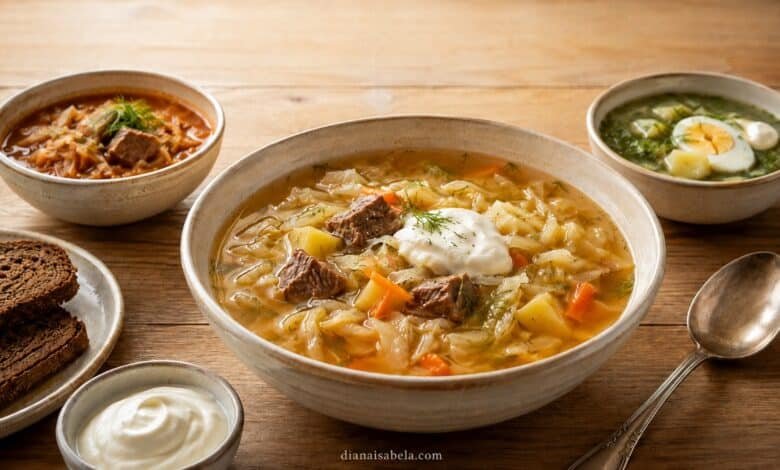
Shchi is a traditional soup most closely associated with Russian cooking, usually built around cabbage, broth and a small group of vegetables that become far more interesting together than their grocery-list modesty suggests. Fresh cabbage can make the soup light and gently sweet; sauerkraut can turn the same general idea tangy, deep and almost startlingly savory. Then green shchi enters with sorrel and proves that even the cabbage part of the definition has exceptions.
That flexibility is probably why shchi can be difficult to understand from a menu description. One restaurant may serve a clear beef broth with cabbage and potato. Another brings you a darker sauerkraut version with meat. A third may offer a green sorrel soup with egg. All can belong to the shchi family without tasting remotely like identical bowls.
What ties them together is less a single mandatory recipe than a recognizable soup tradition: simple ingredients, a savory broth, vegetables cooked until their flavors belong to one another, and a style of comfort that is wonderfully uninterested in showing off.
Shchi Is Simple to Describe and Much Harder to Reduce to One Recipe
At its most familiar, shchi is a cabbage-based soup made with broth, cabbage, onion, carrot and often potatoes, with meat, mushrooms, herbs or sour cream depending on the kitchen. Fresh white cabbage produces a milder soup. Sauerkraut produces a more acidic one. Both belong comfortably under the name shchi.
The soup is often written in Cyrillic as щи. English spellings such as shchi or schi are attempts to represent a Russian sound that does not map especially elegantly onto English letters, which is why the name can look more intimidating than the actual dish. The soup itself is extremely approachable.
What I would not do is define shchi as simply “any Russian cabbage soup.” That description is helpful for somebody seeing the word for the first time, but it can become too broad. Cabbage soup exists in many cuisines, and those soups do not become shchi merely because the ingredients overlap. I explore that boundary separately in my look at where shchi ends and the much wider cabbage-soup world begins.
The Ingredient List Is Humble. The Balance Is Not.
Shchi is exactly the kind of dish that makes a short ingredient list misleading. Cabbage, onion, carrot, broth and perhaps potato do not sound theatrical, but the way those ingredients cook together determines whether the soup tastes thin, sweet, savory, acidic, meaty or beautifully balanced. Nothing is hiding behind twenty spices or an elaborate sauce.
The useful thing to remember: shchi is not identified by one perfectly fixed ingredient list. Fresh cabbage versus sauerkraut, broth choice, meat and regional or household habits can all alter the finished bowl considerably.
Three Bowls Explain the Shchi Family Better Than One Definition
If someone served me only one version and said, “This is what shchi tastes like,” I would immediately want to know which shchi. The major styles can be different enough that a person who dislikes one may genuinely enjoy another.
Fresh-cabbage shchi
This is often the gentlest introduction. Fresh cabbage softens into the broth while retaining a mild vegetal sweetness, and carrots and onions usually reinforce that softer character. Depending on the stock and amount of meat, the result can feel light and almost delicate or more substantial without becoming especially sour.
Sour-cabbage shchi
Here sauerkraut changes everything before the pot is even heated. Fermentation brings acidity and a deeper cabbage aroma, so the soup feels sharper and more assertive. Beef and potatoes work particularly well because their richness and mildness give the fermented cabbage something to push against.
Green shchi
Green shchi commonly moves toward sorrel or other leafy greens rather than white cabbage. Sorrel contributes its own natural tartness, and potato, egg, herbs and sometimes meat create a soup that can feel much brighter than the brown-gold comfort-food image people often associate with shchi.
The first two are easy to compare directly because the cabbage choice changes the flavor so dramatically. I have a closer tasting comparison of those two very different cabbage moods, while the leafy version gets its own explanation in my guide to the tart sorrel variation.
What Does Shchi Actually Taste Like?
There is no one-word answer, but there is a useful pattern. Shchi is usually savory first. The broth matters, cabbage matters, and the vegetables should taste integrated rather than like separate boiled pieces floating through water. From there, the style determines whether the dominant impression is mild, rich, fermented or green and tart.
Mildly sweet cabbage, savory broth, softened onion and carrot, gentle vegetable flavor and whatever richness the meat or stock contributes.
Noticeably tangier, saltier and deeper because fermented cabbage changes both the aroma and the broth.
Brighter, leafier and more sharply acidic, with sorrel providing a clean tartness unlike sauerkraut fermentation.
One thing shchi should not need is aggressive seasoning to make it recognizable. Its appeal is exactly the opposite. A good version lets a few ordinary ingredients build flavor gradually. It is a soup for people who understand that cabbage can have range.
I go further into the sensory side in my tasting-focused explanation of the broth, cabbage and acidity.
Broth Quietly Decides Whether the Bowl Feels Light or Serious
Beef broth gives shchi immediate depth and works especially naturally with sauerkraut. The acidity cuts through richer meat flavor, while potatoes and sour cream can soften the edges. A bowl like this can easily function as lunch rather than an introductory course.
Chicken broth usually makes the soup feel lighter and cleaner. Fresh cabbage works beautifully in that setting because its sweetness is not overwhelmed by a heavy stock. Green sorrel shchi can also work with chicken, where the contrast between a mild broth and tart greens remains clear.
Mushroom or vegetable broth opens a different direction entirely. A meatless shchi is not automatically a lesser version if the broth has enough depth. Mushrooms, properly browned aromatics and fermented cabbage can produce an extremely savory bowl without meat playing referee.
The word shchi, therefore, does not guarantee beef. If that matters for dietary or religious reasons, ask what the broth is made from rather than trying to infer it from the presence or absence of meat pieces.
Why Sauerkraut Changes More Than Just Sourness
Calling sour shchi “fresh shchi plus something acidic” misses the most interesting part. Fermented cabbage has already changed before it reaches the pot. Its aroma, salinity, texture and acidity are different from raw fresh cabbage, and those differences move into the broth as the soup cooks.
This is why vinegar cannot simply reproduce the same result. Vinegar can make a fresh cabbage soup sour, but it does not make the cabbage fermented. The soup may be pleasant, but the flavor development is different.
Sauerkraut also handles rich meat exceptionally well. What could become a heavy beef-and-potato soup stays lively because the fermented cabbage keeps interrupting the richness. Add rye bread and a little sour cream and you understand why this combination survives cold weather so convincingly.
Does Shchi Always Contain Tomato?
No. Tomato can appear in some versions, but it is not required to make the soup shchi. This matters because people unfamiliar with Eastern European soups often expect every cabbage soup to lean either red or tomato-heavy. Shchi can be pale gold, amber, greenish or deeper brown depending on the stock and ingredients.
A little tomato can add sweetness, acidity and color without turning the soup into borscht. What matters is the overall construction of the bowl. Beetroot is not the defining ingredient, and the soup does not need to become red to look “correct.”
If a photograph shows a cabbage soup that resembles tomato soup more than broth, I would want to know the actual recipe before treating that image as a universal representation of shchi.
Shchi Is Not Pale Borscht
This comparison appears constantly because both soups can contain cabbage, potatoes, carrots, onion, meat, herbs and sour cream. On paper that overlap looks substantial. On the spoon, it becomes much less convincing.
The familiar red form of borscht is organized around beetroot, which contributes unmistakable earthy sweetness and its deep ruby color. Classic cabbage shchi does not have that beet-driven flavor. Sour shchi can be intensely acidic, but its acidity is often rooted in fermented cabbage rather than in the sweet-and-sour balancing act of beet borscht.
They are neighbors on many menus, not interchangeable soups. If you are deciding which bowl suits you, my cabbage-and-beet comparison separates them by taste rather than by vague regional labels.
The Bowl Usually Does Not Need Much Decoration
Shchi is not a soup that becomes more convincing under six garnishes. A little dill, perhaps scallion, and a restrained spoonful of sour cream are enough. The soup itself should remain visible. If a garnish hides the cabbage, we have moved from serving dinner into set design.
Dark rye bread is one of the most natural things to place beside the bowl, particularly with sour shchi. The bread adds substance and works beautifully with broth. With lighter fresh-cabbage soup, rye-wheat bread or another sturdy loaf works just as well.
Sour cream deserves to be added according to taste rather than obligation. I like trying a spoonful of broth first because it tells me what the cook actually made. Then the cream can soften acidity, add richness and slightly thicken the mouthfeel without erasing everything underneath.
For a larger meal, I would choose the rest of the table according to how substantial the soup already is. My dinner-pairing guide covers bread, kotleti, buckwheat, potatoes, salads and the point at which a comforting meal becomes unnecessarily ambitious.
If You Have Never Tried Shchi, What Should You Order First?
If you generally like sauerkraut, pickles and fermented flavors, I would begin with sour-cabbage shchi. It has the strongest personality and makes the distinction from generic fresh vegetable soup immediately obvious. A beef version with potatoes, rye bread and sour cream is a particularly satisfying introduction.
If you dislike fermented cabbage or simply want something gentler, fresh-cabbage shchi is the safer first bowl. You still get the cabbage-and-broth character without the stronger acidity. It is also useful for understanding how much flavor the soup can build from deceptively ordinary vegetables.
If sorrel is available and you enjoy lemony, leafy acidity, green shchi may be the most surprising choice. It breaks the visual expectation of cabbage soup altogether and shows how flexible the name can be.
When the menu gives you only “shchi” with no description, ask what kind it is. Fresh cabbage, sauerkraut or green? Beef, chicken or vegetable broth? Meat or no meat? Those few questions solve most unpleasant surprises, and I keep the full restaurant-ordering logic here.
Why Shchi Can Be Easier to Find in a Deli Than on a Restaurant Website
Shchi is exactly the kind of soup that fits a prepared-food kitchen. It can be cooked in quantity, reheats well, and sits naturally beside kotleti, mashed potatoes, buckwheat, cabbage rolls, salads and other Eastern European comfort foods. That means a Russian or Ukrainian grocery with a serious hot-food counter can sometimes be a better lead than a polished restaurant search.
The difficulty is rotation. A kitchen may cook shchi only on certain days, or make a fresh version one week and a sour version another. Some businesses never publish a complete soup schedule online. Calling ahead is not old-fashioned here; it is efficient.
If that sounds more complicated than typing “cabbage soup” into a map, my prepared-food-counter strategy explains what I would actually ask before making the trip.
What Shchi Is Not
Cabbage appears in many borscht recipes, but familiar red borscht gets its central identity from beetroot rather than from cabbage alone.
Fresh-cabbage shchi can be mild and gently sweet. Sauerkraut versions are the ones that bring strong fermented acidity.
Beef is common, but chicken, mushroom, vegetable and other preparations exist.
Other cuisines have their own cabbage and sauerkraut soups with distinct names, histories and flavor structures.
The familiar versions are broth-based soups where cabbage, vegetables and other ingredients remain recognizable.
Why Such a Simple Soup Has Lasted
Shchi makes sense in the way enduring home food often makes sense. Cabbage stores well. Fermented cabbage stores even better. Broth stretches meat. Potatoes make a pot more substantial. A little sour cream makes a sharp bowl feel luxurious without requiring luxury ingredients.
But practicality alone does not keep a dish alive. Plenty of historically practical foods disappear once people no longer need them. Shchi survives because the combination is genuinely good. Sweet cabbage and broth are good. Sour cabbage and beef are good. Rye bread dipped into hot soup is extremely good. Sometimes culinary history is less mysterious than we make it.
It is also a soup that tolerates household personality. One cook wants more cabbage, another more broth. Someone insists on potatoes; someone leaves them out. Beef can be central or absent. Sour cream may arrive in the bowl or on the table. That flexibility makes shchi feel less like a museum recipe and more like food people can actually continue cooking.
How I Would Explain Shchi to Someone Who Has Never Seen It
I would probably skip the historical lecture and say this: imagine a deeply comforting broth-based soup where cabbage is allowed to be the main character. Sometimes the cabbage is fresh and the bowl is gentle. Sometimes it is fermented and the soup becomes tart and savory. Sometimes sorrel turns the entire idea green and bright.
Then I would warn them not to expect borscht. No beetroot is required, red is not the default color, and the flavor is much less about earthy sweetness. If they like sauerkraut, I would steer them toward sour shchi. If they want something calmer, fresh cabbage. If they love sorrel or lemony greens, green shchi.
Most importantly, I would tell them not to judge the soup by how modest it looks. A pale bowl of cabbage, potato and broth does not photograph with the drama of crimson borscht, but food does not receive points for matching lipstick.
Finding the Bowl Is Often the Harder Part
Shchi is familiar enough to be traditional and obscure enough in many American cities to require a little detective work. It may appear under the word shchi, under Cyrillic щи, under a translated phrase such as “Russian cabbage soup,” or only on a rotating deli menu that disappears before anyone updates the website.
For that reason, I separate understanding the dish from locating it. If you already know what you want and simply need somewhere to start looking, this is where I collect the broader search for a bowl of shchi.
Once you find one, ask what version it is before ordering. That single question tells you more than a dozen generic menu photographs.
Every Family Seems to Have One Detail That Cannot Be Negotiated
This is what I want to collect about shchi: not only recipes, but the tiny rules people inherit without realizing they are rules. Maybe your family always uses fresh cabbage. Maybe sour shchi must rest overnight before anyone considers it finished. Perhaps potatoes are essential, perhaps they are an offense, or perhaps the only real argument is whether sour cream goes into the bowl before it reaches the table.
I am equally interested in the versions appearing in restaurants, neighborhood markets and prepared-food counters now. If you find a particularly good shchi, an unusual green variation, a family-style preparation or a menu translation that finally explains the soup beautifully, send me the details. Tell me the city, what was in the bowl and what made it memorable.
Shchi looks simple enough to explain in one sentence, but the more kitchens you look at, the more that sentence starts growing branches. That is exactly the kind of food story I like.
info@dianaisabela.comQuestions About Shchi Soup
What is shchi soup?
Shchi is a traditional soup most closely associated with Russian cooking. Familiar versions are made with fresh cabbage or sauerkraut, broth, onion and carrot, often with potatoes, meat, mushrooms, herbs or sour cream depending on the recipe.
Is shchi made with cabbage or sauerkraut?
It can be made with either. Fresh-cabbage shchi is generally milder and more vegetable-forward, while sauerkraut creates a tangier style commonly known as sour shchi.
What does shchi taste like?
The flavor depends strongly on the style. Fresh shchi is usually savory, brothy and mildly sweet from cabbage and vegetables. Sour shchi is tangier and more fermented, while green shchi made with sorrel has a brighter leafy acidity.
Is shchi the same as borscht?
No. Classic shchi is associated primarily with cabbage, while familiar red borscht is centered on beetroot. The two soups can share ingredients such as cabbage, potatoes, carrots, meat and sour cream but have different flavor structures.
Does shchi always contain meat?
No. Beef is common in hearty versions, but shchi can also be made with chicken, mushroom or vegetable broth and can be prepared without meat.
What is green shchi?
Green shchi is commonly a sorrel-based soup rather than a white-cabbage soup. It may contain potatoes, egg, herbs and chicken or other meat, and it has a fresh tart flavor from the sorrel.
Is shchi always sour?
No. Fresh-cabbage shchi can be quite mild. Sour versions gain their stronger acidity from fermented cabbage or sauerkraut, while green shchi gets a different kind of tartness from sorrel.
What is usually served with shchi?
Shchi is commonly served with sour cream, fresh herbs and substantial bread such as rye. Richer meals may also include kotleti, potatoes, buckwheat, dumplings or a fresh salad.
How is shchi written in Russian?
Shchi is written as щи in Cyrillic. English spellings attempt to represent a Russian sound that does not have a simple direct equivalent in English.
Where can I find shchi?
Look at Russian, Ukrainian and broader Eastern European restaurants, grocery stores and prepared-food counters. Shchi may appear on rotating soup menus, so calling ahead can be useful when making a special trip.