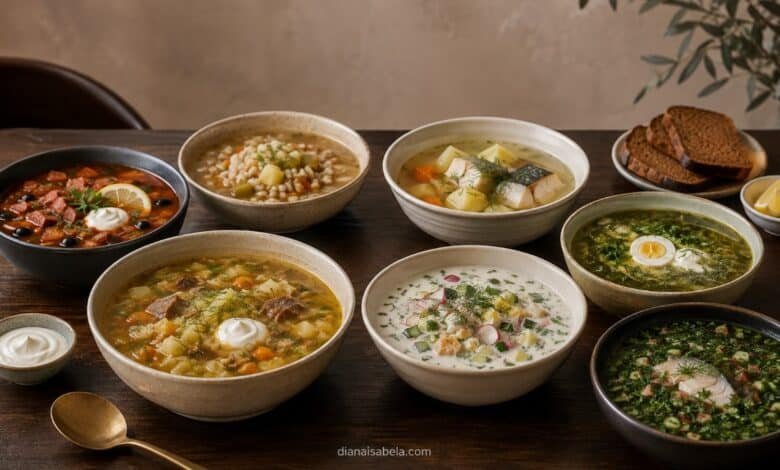
Ask someone who did not grow up around Eastern European food to name a soup from the region and there is a very good chance one red bowl arrives first: borscht. I understand why. Beet color is magnificent, sour cream swirls beautifully into it, and it has enough personality to survive decades of restaurant menus, family arguments and photographs in which the color red is doing at least half the work.
But stopping there is a little like visiting Italy, eating one excellent pasta and deciding the rest of the country may now close. Russian cooking has an entire soup vocabulary built around cabbage, brine, fish, fermented drinks, summer vegetables, mushrooms and whatever the season happens to be doing outside the window.
Some of these soups are gentle. Some are aggressively sour. One is cold enough for a July lunch, another tastes as though it was invented because February needed emotional assistance, and a good fish broth can be so clear and restrained that it feels almost minimalist. The interesting part is not choosing a single winner. It is realizing how different the bowls are.
Borscht Is a Beginning, Not the Entire Soup Conversation
Borscht itself belongs to a broad Eastern European culinary world, with especially important Ukrainian traditions, and I would not flatten that history merely to create a tidy list of “Russian soups.” What interests me here is the practical restaurant problem: people see an Eastern European menu, recognize borscht, and order the one familiar word while six completely different bowls remain unexplored.
That is a shame because the alternatives are not minor variations on beet soup. Shchi is cabbage-led. Solyanka is briny, meaty and assertive. Rassolnik brings pickle brine into a softer grain-and-broth structure. Ukha moves into clear fish broth. Okroshka changes the temperature completely. Green shchi and botvinya bring leafy, tart summer flavors into the picture.
If borscht is the reference point you already know, this is how I separate beet-driven borscht from cabbage-driven shchi by what actually happens on the spoon. Then we can leave the beetroot behind for a while.
Shchi: The Cabbage Soup That Changes More Than Its Reputation Suggests
Shchi is the soup I would give someone who thinks traditional cabbage soup must be dull. At its simplest, it can be clear, savory and surprisingly delicate: broth, fresh cabbage, onion, carrot, perhaps potato, perhaps beef, dill and sour cream at the table. There is nothing theatrical about it, and that is part of its charm.
Then fresh cabbage becomes sauerkraut and the personality changes. Sour shchi can be tangy, deeper and much more assertive, particularly when fermented cabbage meets beef broth. The acidity is not the bright lemony flash of a seafood soup and it is not the pickle-heavy brininess of solyanka. It feels rounder and more integrated because the sourness belongs to the cabbage itself.
This is also why saying “I tried shchi once” does not necessarily tell me very much. A mild fresh-cabbage bowl and a deeply fermented version can feel like relatives who share a surname but would never choose the same restaurant.
If you want to cook rather than merely read about it, my homemade version starts with beef broth and fresh cabbage, then shows how I turn the same idea toward sauerkraut.
I would order shchi when: I want real comfort food without necessarily wanting the heaviest thing on the menu. Fresh shchi suits a quieter appetite; sour shchi is where I go when I want more fermentation, acidity and depth.
Solyanka: For the Day Subtlety Has Left the Building
If shchi can whisper, solyanka generally has no interest in doing so. Familiar meat versions combine a rich broth with several meats or sausages, pickled cucumber and tomato, and they are often finished with briny elements such as olives, plus lemon and sour cream. The result is layered, salty, sour, smoky and distinctly more crowded than a simple cabbage broth.
This is the soup for someone who looks at a quiet broth and wonders whether perhaps it could contain three more opinions. Pickled cucumber contributes a very different acidity from sauerkraut. Tomato deepens the broth without turning it into borscht. Smoked or cured meats can add another level of intensity, while lemon at the table gives the whole bowl a sharper high note.
Not every pot contains exactly the same mixture, and that is worth remembering when reading restaurant descriptions. Meat, fish and mushroom traditions all exist, though the hearty mixed-meat version is probably what many diners now encounter first.
I compare the two sour directions more closely in my tasting guide to the difference between fermented-cabbage shchi and the pickle-driven drama of solyanka.
I would order solyanka when: I am hungry, I like pickles, and I want the soup itself to be the event rather than a polite opening act.
Rassolnik: Pickle Brine, Barley and a Surprisingly Cozy Middle Ground
Rassolnik is the soup I wish more people met before deciding that pickle soup sounds peculiar. Pickled cucumber and its brine provide the defining sour-salty note, but the bowl can be softened by potatoes, vegetables and pearl barley. Instead of tasting like someone emptied a pickle jar into stock, a good rassolnik uses brine as part of a much broader savory structure.
Traditional versions can include meat or offal, while contemporary household and restaurant recipes vary considerably. Pearl barley is particularly important to the texture of many familiar versions because it gives the broth a gentle thickness and chew without making it creamy.
The easiest way to distinguish rassolnik from solyanka is not simply “both contain pickles.” Solyanka tends to feel more concentrated and extravagant, especially when several meats, tomato, olives or lemon join the bowl. Rassolnik can feel earthier and calmer, with grain, potato and brine sharing the work.
I would also give rassolnik to anyone who claims they dislike sour soup but happily eats dill pickles. Sometimes the problem is not acidity. Sometimes the problem is marketing.
I would order rassolnik when: I want something tangy but less theatrical than solyanka, especially if barley, potatoes and pickle brine sound like exactly the sort of lunch a grey day deserves.
Ukha: The Clear Fish Broth That Proves Comfort Food Does Not Need to Be Heavy
Ukha changes the mood completely. Where cabbage soups gain body from vegetables and sour soups lean on fermentation or pickles, ukha is built around fish and a clear broth. Depending on the version, potatoes, onions, root vegetables and herbs may join it, but the fish should remain the reason the pot exists.
This is not the place for cream to cover mediocre seafood. A good ukha should taste clean enough that you can still tell there is fish beneath the seasoning. The broth may look almost modest compared with borscht or solyanka, yet that clarity makes the quality of the fish and stock more obvious, not less.
Different fish can be used, particularly freshwater species in traditional contexts, and recipes vary by place and cook. That means I would ask what fish is actually in the pot before ordering instead of assuming every ukha tastes alike.
The closest Western culinary comparison may be the idea of a clear fish soup rather than a thick chowder, but even that does not completely capture its personality. Ukha belongs to the category of dishes that look simple enough to improvise and then reveal every shortcut you took.
I would order ukha when: I want something savory and warming but do not want cabbage, tomato or a heavy meat broth. It is the quietest soup on this list in the best possible way.
There Is an Entire Russian Soup Vocabulary for Sourness
One of the most interesting things about tasting these soups beside each other is realizing that “sour” is almost useless as a description unless you explain where the acidity comes from.
In sour shchi, fermented cabbage brings lactic tang and cabbage flavor together. Solyanka can combine pickle acidity, tomato and lemon with salty or smoked meats. Rassolnik lets cucumber brine become part of a gentler broth with grain and vegetables. Green shchi gets tartness from leafy greens such as sorrel. Okroshka may use fermented kvass or cultured dairy, producing yet another completely different kind of refreshing acidity.
These are not interchangeable tricks. Replacing sauerkraut with vinegar does not create the same shchi. Removing the pickles from rassolnik changes its center of gravity. And a squeeze of lemon cannot turn ordinary vegetable broth into solyanka simply because both taste sour.
Once you notice the source of acidity, ordering unfamiliar soups becomes considerably easier because the menu stops reading like seven variations on “something tangy.”
Okroshka: The Soup That Refuses to Participate in Winter
Then summer arrives and the entire logic of the soup pot changes. Okroshka is served cold and typically brings together finely chopped ingredients such as cucumber, radish, potato, herbs and egg, with versions based on kvass or cultured dairy such as kefir. Meat can appear too, depending on the recipe.
The first surprise is texture. After several bowls of long-simmered cabbage and tender beef, cold cucumber and radish feel almost rebellious. The second is the liquid itself. Kvass gives a fermented, lightly malty dimension, while kefir-based versions move toward creamy tartness. They can taste dramatically different even when much of the chopped filling is similar.
I would not describe okroshka as a cold version of another Russian soup because its appeal is fundamentally tied to freshness and temperature. It belongs to hot weather in the same way gazpacho does, although the ingredients and flavor logic are entirely its own.
It is also an excellent test of whether someone genuinely dislikes cold soup or has simply never met one with enough texture. Between radish, cucumber, herbs and potato, there is a lot going on before the spoon even reaches the liquid.
I would order okroshka when: it is hot outside, the idea of steaming beef broth sounds vaguely threatening, and I want lunch that feels refreshing without becoming a salad.
Green Shchi: When Sorrel Takes Cabbage’s Place in the Spotlight
Green shchi is where the word shchi becomes wonderfully inconvenient for anyone expecting cabbage in every bowl. Sorrel is a common defining green, bringing a natural lemony tartness that makes the soup taste brighter and sharper than classic fresh-cabbage shchi.
Potato, broth, herbs and egg often appear around that green base, and sour cream can soften the acidity at the table. The result occupies a curious space: comforting enough to feel like soup, yet bright enough that I would happily eat it when the weather is no longer demanding wool socks.
Names can also overlap across families and restaurants. You may encounter related sorrel soups described as green shchi, sorrel soup or green borscht depending on cultural and household context. I care less about forcing every family recipe into one perfect English box than about finding out what is actually in the bowl.
If sorrel soup is new to you, this is my deeper look at why the green version tastes so different from ordinary cabbage shchi.
I would order green shchi when: I want broth but not heaviness, and the idea of tart greens, potato, herbs and egg sounds more attractive than another deeply simmered winter soup.
Botvinya: The Beautiful Oddball That Deserves More Curiosity
Botvinya is the one I would order immediately if I found a thoughtful traditional version, partly because it is much less commonly encountered than the other soups here. It belongs to an older cold-soup tradition built around greens and kvass, with beet tops associated with the dish and fish appearing in classic forms.
That description alone should make clear why calling it “another okroshka” misses the point. Okroshka is about finely chopped summer ingredients suspended in a cold liquid base. Botvinya puts leafy greens much closer to the center of its identity, and traditional presentations can make fish an important companion rather than an optional chopped addition.
It is the sort of dish that reminds me how deceptive the phrase “traditional cuisine” can be. We often imagine it as ten famous dishes preserved forever, when real culinary traditions contain fashionable dishes, forgotten dishes, seasonal dishes, expensive dishes, everyday dishes and recipes that nearly disappear because they are simply more work than Tuesday evening permits.
I would not expect botvinya at every Russian restaurant. But if a serious menu offers it in warm weather, I would be far more curious about that bowl than about ordering something I already know by heart.
I would order botvinya when: I want the least predictable choice on the list and I am interested in a cold, green, tart soup with a much older-fashioned personality.
Which Russian Soup Should You Try Next?
I would choose by craving rather than by trying to identify which soup is supposedly the most important. Importance does not help much when you are hungry.
The Weather Changes the Menu More Than People Expect
One reason this soup repertoire feels so much broader than the usual red-bowl stereotype is seasonality. A steaming beef shchi with sauerkraut and sour cream makes intuitive sense in cold weather. So do the heavy briny flavors of meat solyanka or a substantial rassolnik.
Move into warmer months and sorrel, cold kvass-based soups, cucumber, radish and leafy greens suddenly become much more logical. Okroshka is not a strange cold version of winter soup. It answers a different question entirely: what should soup feel like when the kitchen is already warm and nobody wants a pot radiating heat for three hours?
I like thinking about Russian soups this way because it turns the category from a list of names into a year of appetites. Winter wants broth and fermentation. Summer gets to be crisp, tart and cold.
Where Do Mushrooms Fit?
Almost everywhere, which is why I hesitate to reduce them to one single canonical “Russian mushroom soup.” Mushrooms can enrich meatless cabbage soups, appear in sour soups and form the savory center of their own broths. Dried mushrooms in particular can provide astonishing depth because their soaking liquid contributes flavor before the mushrooms themselves even enter the pot.
If you are vegetarian, this matters. You do not necessarily need to approach this cuisine by removing meat from a beef soup and hoping the vegetables forgive you. Mushroom broth can create a genuinely satisfying savory foundation of its own, especially with cabbage, potatoes, barley or sauerkraut.
It is also one reason I would ask what broth a restaurant uses rather than assuming a cabbage soup is vegetarian because no meat is visible on top.
Sour Cream Is a Supporting Actor, Not a Mandatory White Blanket
Smetana or sour cream appears beside many of these soups for good reason. Fat softens acidity, gives body to broth and creates a cooling contrast with very hot soup. It can be beautiful with sour shchi, borscht, rassolnik and green soups.
But I prefer tasting the broth first. A large spoonful of cream immediately changes acidity, temperature and texture, which means you lose the chance to understand what the cook actually built.
My approach is simple: one spoonful on the side, a first taste without it, then adjust. A soup should not need to disappear beneath a white duvet before it becomes edible.
Rye Bread Has a Remarkable Ability to Make Soup Feel Like Dinner
A slice of dark rye beside shchi or rassolnik does more than provide carbohydrates. The bread’s earthy flavor makes fermented cabbage and pickled components feel even more at home, while its dense texture gives you something solid between spoonfuls of broth.
With very rich solyanka, I would keep the rest of the table restrained. With lighter fresh shchi, I might happily add a second course. The pairing depends on whether the soup is beginning dinner or already attempting to become all of dinner.
For shchi specifically, this is how I decide when bread is enough and when the bowl wants kotleti, buckwheat, potatoes or something fresher beside it.
How I Read a Soup Menu When the Description Is Terrible
Menus are not always helpful. Sometimes you receive “cabbage soup,” “pickle soup” or simply a transliterated name with no explanation whatsoever. Rather than pretending I understand exactly what will arrive, I ask a few specific questions.
For shchi, I want to know whether the cabbage is fresh or fermented and what broth is used. For solyanka, I want to know whether it is the meat, fish or mushroom direction and what pickled ingredients are present. For rassolnik, I ask about barley and meat. For ukha, I ask which fish. For okroshka, I want to know whether the liquid is kvass-based or dairy-based because that completely changes the experience.
These are not fussy questions. They are the difference between ordering a soup you will probably love and discovering halfway through lunch that “sour” meant something very different from what you imagined.
For cabbage soup in particular, these are the few questions I use to decode a vague menu before committing to the bowl.
If You Only Try Three, Make Them Truly Different
If I were introducing someone to this soup landscape, I would not serve three similar hot meat broths in a row. I would choose contrast.
First, sour-cabbage shchi: fermented cabbage, broth, dill and sour cream. Second, solyanka: pickles, meat, tomato, briny accents and lemon. Third, okroshka in summer or ukha in colder weather. That trio immediately demonstrates how broad the category can be.
Fresh shchi would then make sense as the quieter sibling of sour shchi. Rassolnik would reveal another way of using pickle acidity. Green shchi would show how sorrel can do something neither cabbage nor cucumber does.
Food becomes much easier to remember when the differences are edible rather than encyclopedic.
Shchi Is Still the Bowl I Would Use as the Doorway
After wandering through pickles, fish, kvass, barley and sorrel, I still think shchi is one of the best places to begin. It has enough familiarity to be approachable — cabbage, broth, potatoes, meat, herbs — while the fresh-versus-sour divide immediately shows that even one soup name can contain more variation than expected.
It is also practical food. You can cook it at home without hunting for an exotic pantry. You can make it vegetarian. You can make it with beef. You can make a mild fresh version or an assertive sauerkraut version. It reheats well and can be frozen.
For the fuller explanation of those variations, I unpack the cabbage, broth, meat and green versions here without pretending there is only one legitimate bowl.
And Then There Is the Problem of Finding It
Borscht has an enormous recognition advantage. A restaurant can put the word on the menu and many diners already know approximately what category of food they are ordering. Shchi, rassolnik and even solyanka may require more explanation, particularly outside areas with substantial Eastern European communities.
That means some of the best possibilities are not always sitting on polished permanent restaurant menus. Prepared-food counters, neighborhood delis and markets with hot-food kitchens can be worth checking, especially for soups that rotate by day rather than remaining permanent fixtures.
If shchi is the one you want to track down first, I keep my broader guide to finding an actual bowl here.
The Soup I Would Pick Depends Entirely on the Day
On a snowy afternoon, give me sour shchi with beef, rye bread and sour cream. On a day when I want the culinary equivalent of turning the volume up, solyanka wins. If I have spent the morning thinking inexplicably fond thoughts about pickles, rassolnik becomes inevitable.
Ukha is for the mood when I want clarity. Okroshka is for weather in which opening the oven feels like a personal attack. Green shchi belongs to the first part of the year when herbs and sour greens suddenly taste more exciting than root vegetables.
And botvinya? That is the one I order because curiosity is one of the better reasons to eat lunch.
If Your Favorite Soup Is Missing, I Want to Hear the Argument for It
A list like this should make someone hungry, not declare the matter permanently closed. Family cooking is far too unruly for that. One household’s essential soup is another family’s thing an aunt made twice in 1997 and nobody has mentioned since.
If there is a Russian soup you think deserves far more attention — a mushroom broth, a regional fish soup, a particular rassolnik, a summer soup your family makes differently, or a shchi variation that would cause an argument if I described it incorrectly — write to me. Tell me what goes into it, when you eat it and, most importantly, what makes your version taste different.
I also want restaurant and deli discoveries. If you find excellent shchi, solyanka, rassolnik, ukha or another hard-to-find soup, send the city, place and what was actually in the bowl. That is how a food guide becomes more useful than a list copied from a menu.
info@dianaisabela.comQuestions About Russian Soups
What Russian soups are there besides borscht?
Well-known examples include shchi, solyanka, rassolnik, ukha and okroshka, along with green shchi and less commonly encountered traditional cold soups such as botvinya. They range from cabbage and meat broths to fish, pickle-based and cold summer soups.
What is the difference between shchi and borscht?
Classic shchi is built around cabbage and broth, while familiar red borscht is driven by beetroot and its earthy sweetness. Both can contain potatoes, carrot, meat, dill and sour cream, but their dominant flavors are very different.
What is the difference between shchi and solyanka?
Shchi gets its identity primarily from cabbage, with sauerkraut creating the sour version. Meat solyanka is typically richer and more briny, using pickled cucumber and often several meats along with ingredients such as tomato, olives and lemon.
What is rassolnik?
Rassolnik is a hot soup characterized by pickled cucumber and brine. Many familiar versions also contain pearl barley, potatoes, vegetables and meat, giving it an earthy and gently sour character.
What is ukha?
Ukha is a clear fish-based soup associated with Russian cooking. Depending on the recipe, fish may be accompanied by potatoes, onions, root vegetables, herbs and simple seasonings while the broth remains relatively clear.
Is okroshka served cold?
Yes. Okroshka is a cold summer soup made with finely chopped ingredients such as cucumber, radish, potato, herbs and egg. Versions may use kvass or a cultured dairy base such as kefir.
What is green shchi?
Green shchi is a tart green soup commonly associated with sorrel rather than the cabbage that defines classic shchi. Potato, broth, herbs, egg and sour cream commonly accompany the greens, although recipes vary.
Which Russian soup is the most sour?
There is no fixed winner because recipes vary. Solyanka can be intensely salty-sour from pickles and lemon, sour shchi gets its tang from sauerkraut, rassolnik uses cucumber brine, and green shchi can be sharply tart from sorrel.
Which Russian soup is best for summer?
Okroshka is one of the clearest warm-weather choices because it is served cold with fresh chopped vegetables and a tangy liquid base. Green shchi can also feel lighter and more seasonal than rich winter meat soups.
Which Russian soup should I try first?
Fresh shchi is approachable if you like mild broth and cabbage. Sour shchi suits sauerkraut lovers, solyanka is ideal for people who enjoy pickles and rich meat flavors, while ukha is a good first choice if you prefer fish.