Shchi Soup Near Me in India: Where to Look From Delhi to Goa
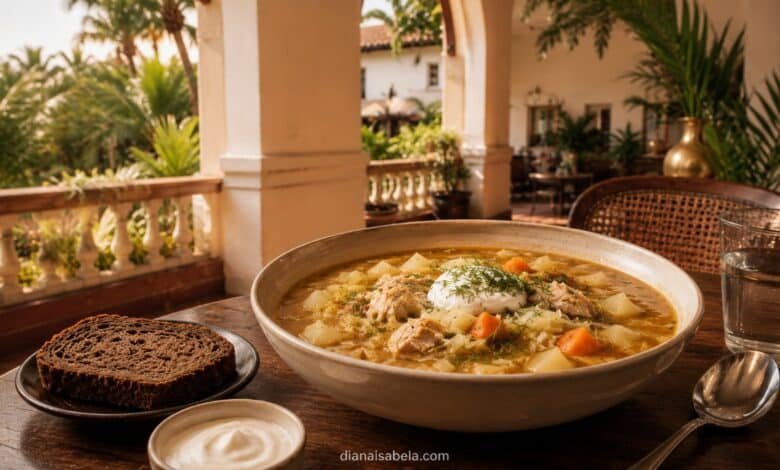
Shchi is not impossible to find in India. It is simply the sort of soup that rewards detective work more than optimism. Russian food exists here, especially in Delhi and Goa, but the dishes that reliably announce themselves online are far more likely to be borscht, blini, pelmeni, cutlets or cold summer soups than a permanent pot of cabbage shchi.
That changes how I would search. I would not type “shchi near me,” choose the first vaguely Russian result and assume dinner has been solved. I would identify kitchens that genuinely cook Russian or Eastern European food, inspect their current soup selection, then ask directly whether they make fresh-cabbage shchi, sauerkraut shchi or a rotating cabbage soup.
India adds another wrinkle that makes this especially worth checking: the meat in the pot cannot be assumed. Beef shchi may be familiar in one culinary context, but an Indian restaurant may use chicken, make the soup vegetarian, or avoid beef entirely. The name tells you less than the kitchen does.
The Difficult Part Is Not Finding Russian Food. It Is Confirming Shchi Today.
Russian restaurants and cafés do exist in India, but shchi has much less visibility than borscht. That means a list of “Russian restaurants in India” is not automatically a list of places serving cabbage soup. One menu may lean toward blini and pelmeni, another toward familiar beet soup, while a café in Goa may adapt its cooking to local preferences and available ingredients.
For this guide, I would therefore treat a place as useful only in one of two ways: either shchi is explicitly confirmed, or the kitchen is relevant enough that asking about a rotating soup makes sense. I would not quietly convert “serves Russian food” into “serves shchi.” Those are different claims.
If you first want to know exactly what dish you are trying to locate, my introduction to the different cabbage, sour and green versions gives you the vocabulary before you start calling kitchens.
Delhi and NCR Are the First Places I Would Check
Delhi has historically had one of the clearest restaurant routes into Russian food in India. That makes the capital the most logical city for a targeted search, but current business information needs more care than an old restaurant roundup suggests.
Blinnaya — The Russian Kitchen
Blinnaya has been associated with Russian cooking in New Delhi and listings have described dishes such as blini, vareniki, pelmeni, cutlets and borscht. Current directory information is inconsistent, however: one recent listing still presents a Shivalik/Malviya Nagar outlet, while another marks the older Lajpat Nagar location as possibly permanently closed.
That is exactly the type of place where I would verify the current outlet and menu rather than build a special journey around an old review. I also did not find reliable current evidence that classic shchi is permanently listed, so this is a Russian-food lead, not a confirmed shchi bowl.
Delhi is also where I would look beyond restaurants. Imported-food stores, home kitchens, expatriate food groups and small delivery businesses can be surprisingly useful for dishes that are ordinary home food but weak restaurant celebrities. Shchi belongs in that category beautifully: culturally important, wonderful to eat, not nearly as gifted at self-promotion as borscht.
The same deli-and-prepared-food logic I use elsewhere applies here too. This is the method I use when the soup may be hiding behind a counter rather than sitting permanently on a polished menu.
Goa Is the More Interesting Russian-Food Wild Card
Goa has long attracted international residents and travellers, and Russian food appears naturally within that landscape. Arambol and the north-Goa belt are therefore worth checking when the goal is a home-style Russian meal rather than a formal city restaurant.
Tri Slona Café — Arambol
Tri Slona is a current family café in Arambol village focused on Russian and European home-style cooking. Its own menu presently lists borscht with vegetarian or chicken options, plus seasonal okroshka and svekolnik. Crucially, the café also states that it does not use beef.
I did not find shchi on the current published menu, so I would not send anyone there promising cabbage soup. But it is a very useful example of how Russian food changes context in India: the culinary language remains recognisable, while the protein choices and menu adapt to where the kitchen actually is.
If I were already in Arambol and specifically wanted shchi, I would ask whether a cabbage soup appears as a special. If not, I would happily consider the other soups for what they are rather than ordering borscht and pretending it is close enough.
For the wider family of Russian soups, I compare the cabbage, pickle, fish, sorrel and cold-soup directions here.
In India, Never Assume “Traditional Shchi” Means Beef Shchi
This is probably the most important local adjustment. Shchi can be cooked with beef, pork, chicken, mushrooms or a meatless broth depending on recipe and household tradition. In India, restaurant practice also reflects local religious, regional and business choices, so the protein deserves a direct question.
A Russian-style café may make cabbage soup with chicken. Another kitchen may use vegetable or mushroom broth. Some places may avoid beef altogether. That does not automatically make the resulting soup meaningless; it simply tells you which variation is being served.
I would ask: “What broth is the shchi made with?” That one sentence is more useful than debating authenticity from a menu title. If the answer matters to you for religious, dietary or personal reasons, ask before ordering rather than assuming from the cuisine name.
The useful distinction: the defining question for classic shchi is usually the cabbage and broth structure, not whether every country must reproduce one identical meat recipe.
Fresh Cabbage May Be Easier to Find Than the Soup Itself
One strange advantage of searching for shchi in India is that the essential ingredient is not exotic. Cabbage, potatoes, carrots and onions are everyday vegetables. Dill can require a little more hunting depending on location and season, but the basic soup does not depend on an impossible imported pantry.
Fresh-cabbage shchi is therefore much easier to reproduce at home than many international dishes whose defining ingredients are expensive or unavailable. Sour shchi needs sauerkraut, but even that can be sourced from imported-food retailers or made through ordinary cabbage fermentation.
If you are deciding between those two pots, this is how I separate the gentle fresh-cabbage version from the deeper fermented one by taste and texture.
How I Would Search for Shchi in India
Do Not Search Only in English
Shchi is awkward enough in English that one spelling can hide useful results. The standard transliteration shchi is common, but a small Russian-speaking kitchen may use Cyrillic щи, while an English-language listing may reduce the entire dish to “Russian cabbage soup.”
For sour versions, try sour cabbage soup and sauerkraut soup too. Then verify that the result is actually shchi rather than one of the many Polish, Ukrainian, Central European or generic cabbage soups that share similar ingredients.
If a menu merely says “cabbage soup,” this is the distinction I use before deciding whether the name is describing shchi or a completely different cabbage tradition.
What I Would Ask the Kitchen
Keep the conversation simple. You are trying to identify dinner, not conduct an oral examination.
- Do you make shchi or Russian cabbage soup?
- Is it available today?
- Is the cabbage fresh or fermented?
- Is the broth vegetarian, chicken, beef or something else?
- Does it contain potatoes?
- Is sour cream served separately?
- Is it a permanent item or a seasonal special?
The cabbage question changes the flavor enormously, and the broth question is particularly important in India. If you want a stronger sour bowl but the kitchen serves fresh shchi, that is useful information before the order arrives.
For a more detailed menu-decoding approach, these are the questions I use when a vague description gives me almost no idea what is actually in the pot.
If the Menu Offers Borscht Instead, It Is Not the Same Craving
Indian Russian-food menus often make borscht much easier to spot than shchi. That does not make borscht a bad consolation prize; it simply makes it another soup.
Familiar red borscht is organised around beetroot, giving the broth earthiness, sweetness and its unmistakable colour. Shchi puts cabbage in the foreground. Fresh shchi can be golden and mild; sour shchi gets its acidity from fermented cabbage.
If you are staring at a menu trying to decide whether borscht will scratch the same itch, my taste-first comparison explains why the two soups overlap on paper more than they do in the bowl.
Solyanka Is Another Possible Find — and an Even Bigger Flavor Change
Solyanka can appear wherever Russian food is being served because it has an assertive restaurant personality: pickled cucumber, meat or sausage, tomato richness, often briny accents and lemon. Compared with shchi, it is louder, saltier and more crowded.
If sourness is what you wanted, solyanka may still satisfy you. But fermented cabbage acidity and pickle-driven acidity are not interchangeable. I would choose it knowingly rather than because the menu happened to run out of cabbage.
If that distinction matters, this is where I compare those two completely different ways of building a sour soup.
Would Green Shchi Make Sense in India?
Culinarily, yes. Green shchi commonly uses sorrel or other tart leafy greens rather than cabbage, with potato, broth, herbs, egg and sour cream appearing in many versions. The warmer climate changes seasonality compared with northern Europe, but the basic idea of a bright green, tart soup travels remarkably well.
The difficulty is nomenclature. A restaurant may call a related dish sorrel soup or green borscht rather than green shchi. As always, I would ask about ingredients instead of insisting that every menu agree on English terminology.
If you find that green bowl and wonder why the cabbage seems to have gone missing, my sorrel-focused explanation shows why this branch of the family deserves its own expectations.
Delivery Platforms Can Be Better Than Restaurant Websites for Small Kitchens
India’s food-delivery ecosystem creates an interesting advantage. Home kitchens and small delivery businesses may exist without a sophisticated website, which makes app searches potentially useful for a dish as domestic as shchi.
I would search both the cuisine and dish names, then inspect the seller carefully. A listing called “Russian food” does not prove traditional cooking, and a delivery-only result can change quickly. Availability also depends on city, neighbourhood and hour.
If a soup appears, check the description for cabbage type and broth. If the listing is vague, message or call before ordering. It is a very small amount of work compared with receiving a generic vegetable soup and spending dinner wondering which part of Russia was apparently involved.
What Would I Eat With Shchi in India?
I would resist the temptation to redesign the entire meal around local fusion unless the kitchen itself does that thoughtfully. Shchi already has its own balance. Dark bread and sour cream are enough for a substantial bowl; dill adds freshness; a meat cutlet or potato side can turn a lighter soup into dinner.
That said, geography always affects what is easy to source. If proper rye is unavailable, I would choose a sturdy unsweetened bread rather than abandon the meal. The point is texture and something substantial to eat with the broth, not bread passport control.
For more combinations, this is how I build the table differently around mild fresh shchi and deeper sour versions.
In India, Homemade Shchi May Be the Most Reliable Shchi
There comes a point where searching becomes less efficient than buying a cabbage. India is unusually friendly to this solution because most of the vegetables are ordinary market ingredients and the recipe adapts well to different broths.
You can make fresh shchi with chicken if that suits your household. You can build a strong mushroom version. You can make it completely vegetarian. If beef is appropriate and available in your context, that is another direction. Sour shchi simply shifts the focus toward sauerkraut.
The thing I would not do is bury the soup under Indian spices until the only surviving connection is the cabbage. Adaptation can be thoughtful without turning every international dish into masala soup by reflex.
If the pot is beginning to sound easier than another search, my recipe starts with the broth-and-cabbage technique and gives you a clear route from fresh shchi to a sour sauerkraut version.
Make More Than One Dinner’s Worth
If you have finally sourced sauerkraut, found dill and spent time building a proper broth, make enough soup to justify your effort. Shchi reheats beautifully, and the flavors often feel even more integrated after resting.
It also freezes well. The cabbage and broth are forgiving; potatoes may soften somewhat, and sour cream is better added fresh after reheating. That turns one afternoon of cooking into several future meals.
For the practical storage side, this is how I portion, freeze and bring the soup back without treating the vegetables badly.
If You Only Want to Taste It Once Before Cooking, Search Strategically
My order would be Delhi/NCR first if you are already there, because that is where the restaurant history gives you useful leads. Goa comes next because Russian home-style food is a visible part of parts of the north-Goa dining landscape. In other major cities, I would search for Russian and Eastern European home kitchens or community food businesses before expecting a permanent shchi restaurant listing.
Mumbai, Bengaluru and other large cities are certainly large enough for international cuisines, but size alone is not evidence that somebody is making shchi this week. I would rather give you a search method than invent a bowl in a city because it would make the page look more complete.
That same principle guides my wider search for shchi in other countries and cities: confirmed soup when we can confirm it, call-first possibilities when we cannot.
If You Find Shchi in India, I Really Want the Details
This is one of those searches where a reader can know something the internet does not. A home kitchen in Delhi may make shchi twice a week. A Russian café in Goa may put cabbage soup on a winter special. Someone in Bengaluru may be quietly selling excellent sour shchi through a delivery group while every large restaurant directory remains completely unaware of this useful fact.
If you find a bowl, send me the city, place, how the menu spells the name, whether the cabbage is fresh or fermented, and what broth they use. In India I am especially interested in how kitchens adapt the meat: chicken, mushroom, vegetarian versions and other local decisions can tell us far more than a generic restaurant category.
And if you make shchi at home, tell me what was surprisingly easy or annoyingly difficult to source. Dill? Good sauerkraut? Rye bread? That practical information is exactly what helps another person turn a vague craving into dinner.
info@dianaisabela.comQuestions About Finding Shchi in India
Can you find shchi in India?
Possibly, especially through Russian restaurants, cafés, home kitchens and specialty food businesses in cities such as Delhi or areas of Goa. However, shchi is not as consistently listed as borscht, so current availability should be confirmed before making a special trip.
Where should I look for shchi in Delhi?
Start with restaurants and home kitchens that specialise in Russian or Eastern European food, then check their current soup selection. Older restaurant listings may not reflect current locations or menus, so verify the business and dish before travelling.
Can I find Russian food in Goa?
Yes. North Goa has Russian and European home-style food businesses, particularly around areas such as Arambol. Current menus may feature borscht and seasonal cold soups even when shchi is not permanently listed.
Is shchi in India always made with beef?
No. Shchi can be made with different meats, mushrooms or vegetable broth, and Indian restaurants may adapt protein choices to local preferences and religious considerations. Always ask what broth and meat are used if it matters to you.
What should I search for besides the word shchi?
Try Russian cabbage soup, sour cabbage soup, sauerkraut soup and the Cyrillic spelling щи. Small kitchens may translate or transliterate the dish differently.
What is the difference between fresh and sour shchi?
Fresh shchi uses fresh cabbage and usually has a milder, gentler broth. Sour shchi uses fermented cabbage or sauerkraut, creating a deeper tang and more assertive flavor.
Is borscht the same as shchi?
No. Familiar red borscht is driven by beetroot, while classic shchi is centred on cabbage. They may share potatoes, carrots, meat, dill and sour cream, but their dominant flavors are different.
Can I make shchi at home in India?
Yes. Cabbage, potatoes, carrots and onions are widely available, and the soup can be made with chicken, meat, mushroom or vegetable broth. Sauerkraut is needed if you want the fermented sour version.
What do you eat with shchi?
Sour cream, dill and sturdy dark bread are simple companions. A lighter shchi can also be served with potatoes, buckwheat, dumplings or a meat cutlet depending on the rest of the meal.
Can homemade shchi be frozen?
Yes. Shchi generally freezes well, although potatoes may become softer after thawing. Sour cream and fresh herbs are best added after the soup has been reheated.